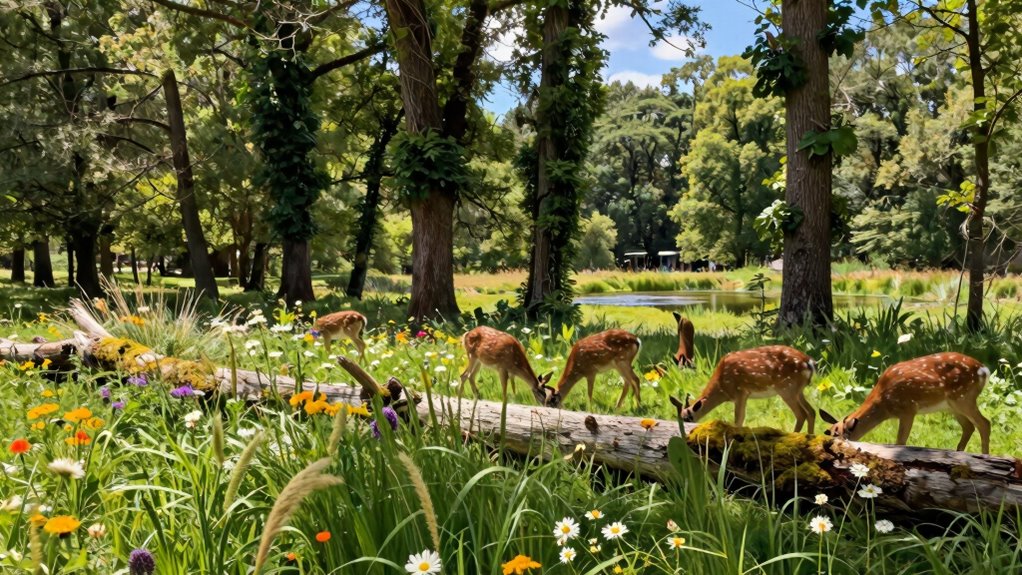

In practice, rewilding means restoring natural processes, reintroducing native species, and removing barriers like fences or invasive plants. You focus on creating connected habitats through corridors, allowing wildlife to move freely and thrive. It involves active management, such as restoring waterways and supporting ecosystem functions like pollination. By fostering resilient and diverse ecosystems, you help landscapes recover and sustain themselves over time. Keep exploring to discover how these strategies can transform landscapes and ecosystems.

Prime made for students and young adults
- Fast, free delivery for dorm and study essentials
- Prime Video and Amazon Music included
- Member-only deals
Key Takeaways
- Rewilding involves restoring natural ecological processes and reintroducing keystone species to rebuild ecosystems.
- It focuses on creating habitat connectivity through corridors to support wildlife movement and genetic diversity.
- Practical actions include removing barriers, restoring waterways, and reintroducing native species for ecological balance.
- Adaptive management ensures rewilding efforts remain flexible, resilient, and responsive to environmental changes.
- It aims for long-term sustainability by enhancing biodiversity, ecosystem functions, and resilience against future challenges.
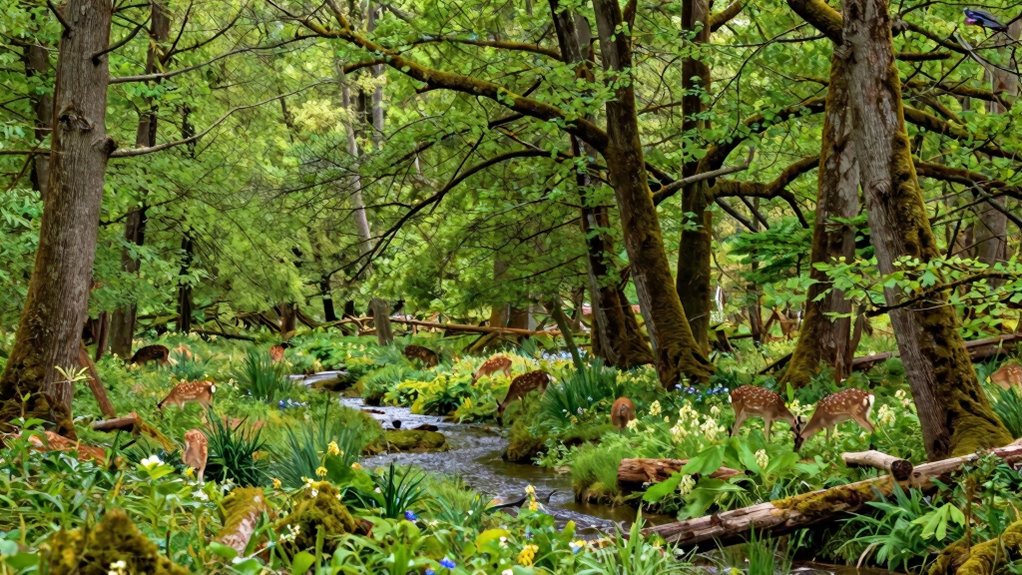
Have you ever wondered how rewilding transforms degraded landscapes into thriving ecosystems? It’s a process that relies on carefully planned restoration techniques designed to bring back natural processes and species that have been lost or diminished. Instead of focusing solely on planting trees or removing invasive species, rewilding often involves a combination of strategies that restore the land’s original functions. For example, reintroducing keystone species plays an essential role, as these animals help shape their environment through natural behaviors like grazing or burrowing. These restoration techniques aim to jump-start ecological recovery, creating conditions where native plants and animals can flourish once again.
A key element of successful rewilding is enhancing habitat connectivity. You might think of habitat connectivity as creating ecological corridors that link isolated patches of wilderness, allowing animals to move freely and access different resources across the landscape. This connectivity is indispensable because it promotes genetic diversity, reduces inbreeding, and supports species migration in response to climate change. When habitats are fragmented by roads, agriculture, or urban development, species struggle to survive, but rewilding seeks to bridge these gaps. By restoring corridors, you help guarantee that wildlife can access breeding sites, food sources, and shelter, which are essential for long-term survival. Restoring these links also helps maintain species movement, crucial for adapting to environmental changes. Additionally, understanding the importance of ecological networks can enhance the effectiveness of these efforts by fostering more resilient ecosystems. Incorporating landscape-scale planning is also vital to ensure that rewilding efforts are comprehensive and sustainable across large areas.
In practice, rewilding often involves removing barriers to movement, such as fencing or invasive plant species, and restoring natural waterways or grasslands. It might also mean reintroducing native species that once thrived in the area, which helps recreate a balanced, self-sustaining ecosystem. These efforts are guided by ecological principles, but they also require active management and monitoring to adapt strategies as needed. For example, if certain species aren’t establishing themselves, you might need to tweak your approach, whether that’s through additional habitat restoration or controlling new threats. Incorporating adaptive management ensures that rewilding projects remain flexible and effective over time.
Ultimately, rewilding in practice is about fostering resilience. You’re not just planting trees or removing pests; you’re cultivating a complex, interconnected system that can sustain itself over time. This holistic approach enhances ecosystem functions like nutrient cycling, pollination, and natural pest control. Through thoughtful application of restoration techniques and a focus on habitat connectivity, you help turn degraded landscapes into vibrant, resilient ecosystems that support a diverse array of life. Restoring biodiversity is fundamental to this process, as it ensures the health and stability of ecosystems in the face of ongoing environmental challenges. This process requires patience and commitment, but the result is a landscape that feels alive, balanced, and capable of thriving long into the future.
Popular right now

Sony WH-1000XM6 Wireless Noise-Canceling Over-Ear Headphones, Blue, Bundle

Ninja Luxe Café Premier 3-in-1 Espresso Machine, Drip Coffee & Cold Brew

Vitamix Propel Series 750 Professional-Grade Blender, 4 Programs, Black
As an affiliate, we earn on qualifying purchases.
Frequently Asked Questions
How Long Does Rewilding Typically Take to Show Results?
Rewilding can take anywhere from a few years to several decades before you see noticeable results. As native flora gradually reestablishes itself, you’ll observe ecosystem recovery happening slowly but steadily. The process depends on factors like the size of the area and existing conditions. Patience is key, because over time, biodiversity increases, and the landscape transforms into a healthier, more resilient ecosystem, showcasing nature’s remarkable ability to heal itself.
What Are the Biggest Challenges Faced During Rewilding Projects?
You face challenges like restoring native species and maintaining ecosystem balance, which are vital for rewilding success. Invasive species can outcompete native ones, disrupting the natural order. Securing funding and public support often proves difficult, while unpredictable weather and human activity add further hurdles. Managing these factors requires careful planning and ongoing effort to guarantee the rewilded area thrives and sustains its ecological functions over time.
Can Rewilding Be Applied in Urban Areas?
Yes, you can apply rewilding in urban areas by enhancing urban biodiversity through green infrastructure. You might create green roofs, community gardens, or restore pocket parks to support native species. These efforts help reconnect fragmented habitats, making cities more resilient and eco-friendly. By prioritizing native plants and creating wildlife corridors, you foster ecosystems that benefit both people and urban wildlife, turning concrete jungles into thriving, rewilded spaces.
Who Funds Most Rewilding Initiatives?
Most rewilding initiatives are funded by private investments and a few generous funding sources, like eco-conscious billionaires or government grants. You’d think environmental salvation comes free, but nope—these projects often rely on wealthy donors or corporations seeking good PR. Imagine billionaires throwing money into rewilding like kids tossing coins into a wishing well, hoping Mother Nature will do the rest while they sit back and watch their green investments grow.
How Do Rewilding Efforts Impact Local Communities?
Rewilding efforts can profoundly impact your local community by fostering community engagement and enhancing ecological benefits. As you get involved, you’ll see improved biodiversity, healthier ecosystems, and increased green spaces. These initiatives can create new jobs and boost local tourism, but they might also lead to restrictions on land use. Overall, your participation helps balance ecological restoration with community needs, ensuring sustainable benefits for everyone involved.
Conclusion
Rewilding isn’t just about returning land to nature; it’s about planting seeds of hope that grow into wild, thriving ecosystems. As you witness these landscapes reborn, remember you’re nurturing the Earth’s heartbeat, allowing it to breathe freely once more. Like a symphony finding harmony, rewilding reconnects us to the wild within and around us. Embrace this journey, for in rewilding, we help nature write its own resilient, beautiful story.