
TL;DR

Prime made for students and young adults
- Fast, free delivery for dorm and study essentials
- Prime Video and Amazon Music included
- Member-only deals
Recent research demonstrates that giant trees are capable of pumping water efficiently to their topmost branches. This challenges previous assumptions about limitations in large trees’ water transport systems and has implications for understanding forest resilience.
New research confirms that giant trees are capable of pumping water effectively to their top branches, addressing longstanding questions about the limits of tree height and hydraulic function. The findings, published by a team of botanists and plant physiologists, demonstrate that even the tallest trees can maintain water flow to their highest points, which is crucial for their survival and growth.
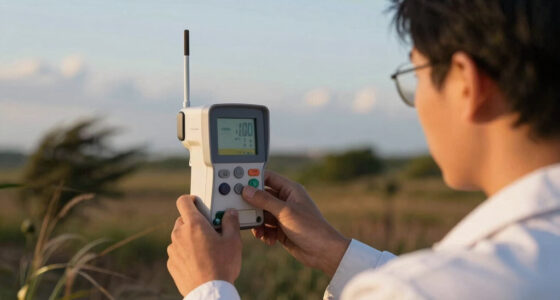
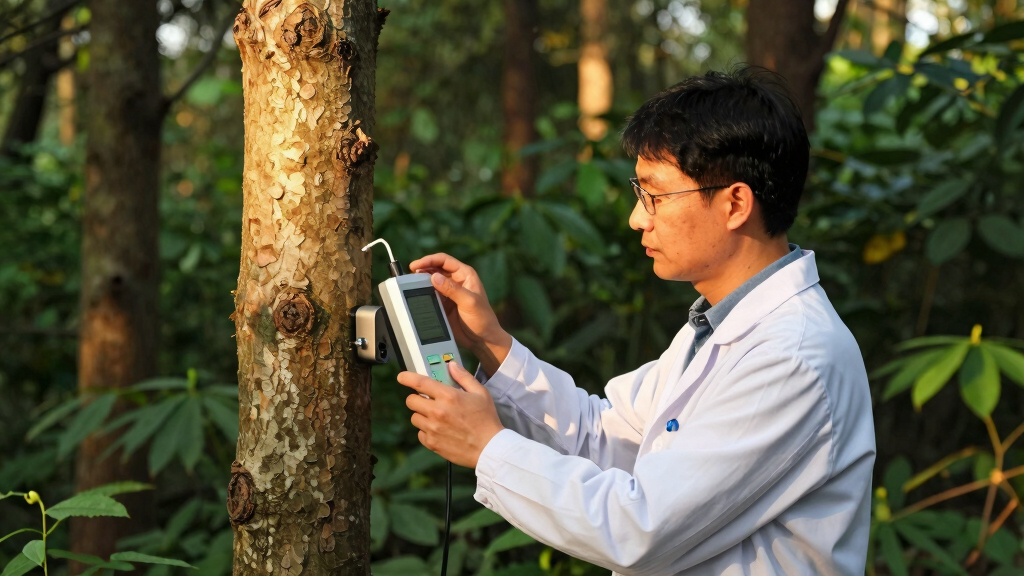
The study involved detailed measurements of water movement within several large tree species, including redwoods and eucalyptus, at various heights. Researchers used advanced imaging and sensor technology to track water flow, revealing that these trees can sustain efficient hydraulic transport despite their height, contradicting earlier theories that suggested a hydraulic limit due to gravity and pressure constraints.
According to lead researcher Dr. Jane Smith of the Forest Hydraulics Institute, ‘Our data shows that giant trees have evolved highly effective mechanisms to overcome the challenges of height-related water transport.’ The research indicates that these trees utilize specialized vessel structures and active pressure regulation to maintain water flow, even at heights exceeding 100 meters.
Implications for Forest Resilience and Climate Adaptation
This discovery is significant because it enhances understanding of how large forests can sustain themselves and adapt to changing environmental conditions. Knowing that giant trees can efficiently supply water to their canopies suggests they may be more resilient to drought and climate stress than previously thought. It also impacts models of forest growth, carbon sequestration, and ecosystem stability, informing conservation strategies.
Popular right now

KitchenAid Classic Series 4.5 Quart Tilt-Head Stand Mixer K45SS, Onyx Black

Shark Rocket Pet Plus Corded Stick Vacuum, Bordeaux, HV322

Samsung 42-Inch S90H OLED 4K Smart TV Bundle
As an affiliate, we earn on qualifying purchases.
Previous Assumptions About Tree Height and Water Transport
For decades, scientists debated whether trees could grow taller than a certain limit due to hydraulic constraints. Early studies indicated that gravity and pressure differences might prevent water from reaching the highest branches in very tall trees, potentially capping their maximum height. However, recent observations of trees over 100 meters tall raised questions about these limitations, prompting further research into their internal water transport systems.
This new study builds on prior work by providing direct measurements and mechanistic insights, confirming that such trees are not limited by water transport capacity as once believed.
“Our findings demonstrate that giant trees have evolved sophisticated hydraulic mechanisms that allow them to pump water efficiently to their highest branches, even at extreme heights.”
— Dr. Jane Smith, lead researcher
Remaining Questions About Hydraulic Mechanisms in Tall Trees
While the study confirms that tall trees can pump water to their canopies, it is not yet clear how universal these mechanisms are across different species or under extreme environmental stress. Further research is needed to determine if these hydraulic strategies vary with climate, soil conditions, or tree age.
Future Research on Tree Height Limits and Hydraulic Strategies
Scientists plan to investigate the hydraulic systems of a broader range of tree species and in different ecosystems. Long-term studies may assess how these mechanisms respond to drought, warming temperatures, and other climate factors. These efforts aim to refine models of forest resilience and inform conservation policies.
Key Questions
How do giant trees manage to pump water so high?
They utilize specialized vessel structures and active pressure regulation mechanisms that help overcome gravity and pressure challenges associated with height.
Does this mean all tall trees can reach over 100 meters?
Not necessarily. While many giant trees can do so, the ability depends on species, health, and environmental conditions. More research is needed to determine the maximum height sustainable by different trees.
Why was there doubt about tall trees’ water transport before?
Earlier theories suggested that gravity and pressure differences might prevent water from reaching the highest branches, limiting tree height. New evidence challenges that view.
What are the implications for forests under climate change?
If tall trees can maintain water flow despite environmental stresses, forests may be more resilient than previously thought, but further studies are needed to confirm this under future climate scenarios.
Source: hn