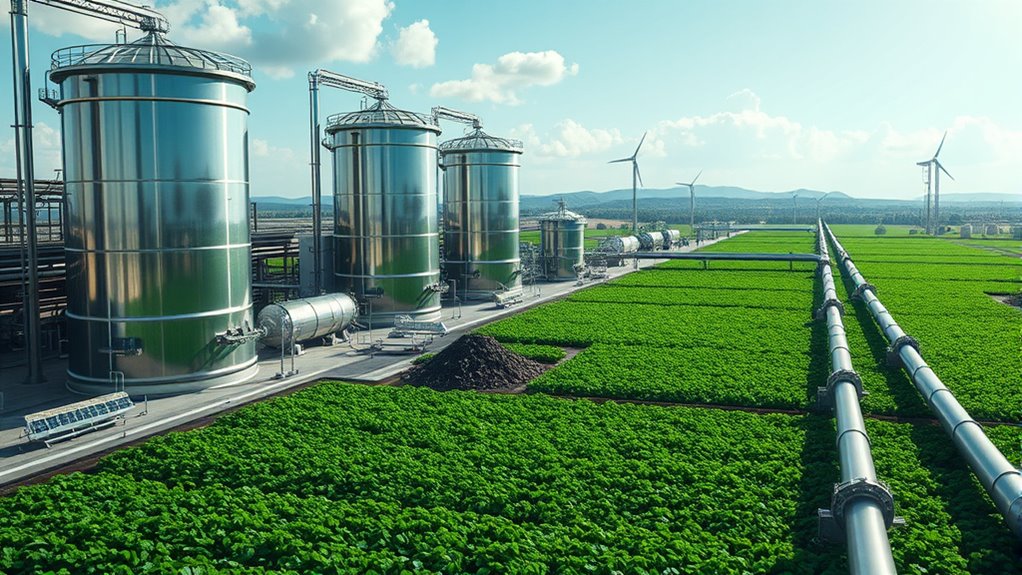

By 2025, biofuel innovations are transforming waste streams like algae and industrial gases into sustainable energy sources. You’ll see advances that capture and convert CO₂, methane, and other waste gases into biofuels, reducing pollution and greenhouse gases. Algae farms are becoming more scalable, providing high-yield, eco-friendly fuel options. If you stay tuned, you’ll discover how these cutting-edge techniques are reshaping our energy future and turning waste into valuable power.

Prime made for students and young adults
- Fast, free delivery for dorm and study essentials
- Prime Video and Amazon Music included
- Member-only deals
Key Takeaways
- Advanced algae cultivation techniques are enabling scalable biofuel production without competing with food crops.
- Waste gases like CO₂ and methane are increasingly converted into biofuels through innovative microbial and chemical processes.
- Integration of algae farming and waste gas conversion technologies boosts overall biofuel sustainability and reduces industrial emissions.
- New methods in 2025 focus on cost-effective, scalable solutions that turn pollution into renewable energy sources.
- These innovations contribute to a greener energy landscape, decreasing reliance on fossil fuels and lowering greenhouse gases.

Biofuel innovations are transforming the way we think about sustainable energy sources. As you look toward 2025, it’s clear that new methods are making it easier for us to turn waste into valuable energy. One of the most exciting developments involves algae cultivation. You might not realize it, but algae are some of the most efficient biofuel sources available today. They grow rapidly, require minimal land, and can thrive in water bodies unsuitable for agriculture. By harnessing algae cultivation, researchers are developing ways to produce biofuels that are both eco-friendly and scalable. Instead of relying on traditional crops like corn or soy, which compete with food production, algae offer a sustainable alternative. You can think of algae as tiny factories that convert sunlight, carbon dioxide, and nutrients into lipids, which can then be processed into biofuels. This process not only reduces reliance on fossil fuels but also helps lower greenhouse gas emissions, making it a win-win for the environment.
Alongside algae cultivation, waste gas conversion is revolutionizing how we think about waste management and energy production. You might be surprised to learn that industrial processes, power plants, and even landfills emit large quantities of waste gases like carbon dioxide and methane. Instead of letting these gases escape into the atmosphere, innovative technologies now allow you to capture and convert them into usable fuel. Waste gas conversion involves using microorganisms or chemical processes to transform these emissions into biofuels such as methane or ethanol. This approach effectively turns a pollution problem into an energy solution. By integrating waste gas conversion into existing infrastructure, industries can reduce their carbon footprint while generating additional revenue streams. Imagine factories that not only produce goods but also capture their emissions to create bioenergy—this is the future that biofuel innovations are paving the way for.
Additionally, the development of WWE Raw’s financial impact underscores how investments in entertainment and media are influencing global economics, much like the investments in biofuel technology are shaping sustainable energy futures.
Together, algae cultivation and waste gas conversion form a powerful synergy that enhances the sustainability and efficiency of biofuel production. You don’t need to be an expert to see that these technologies have the potential to drastically cut our dependence on fossil fuels. As research progresses, you’ll find that these methods become more cost-effective and easier to implement at larger scales. This isn’t just about creating alternative energy sources; it’s about reshaping the entire energy landscape to be more environmentally responsible. By turning waste into energy, you’re contributing to a cleaner planet, all while supporting advancements that make sustainable energy more accessible and affordable. In 2025, biofuel innovations are truly opening new doors—transforming waste into a powerful resource that can fuel your future.
As an affiliate, we earn on qualifying purchases.
Frequently Asked Questions
What Are the Main Challenges in Commercializing Biofuel Waste Technologies?
You face challenges in commercializing biofuel waste technologies primarily due to slow market adoption and technological scalability issues. Convincing industries to switch to waste-based biofuels requires demonstrating cost-effectiveness and reliability. Additionally, scaling up these technologies from pilot projects to full production demands significant investment and innovation. Overcoming these hurdles involves improving technology efficiency and building confidence among stakeholders to accelerate widespread adoption.
How Do Biofuel Innovations Impact Global Food Security?
Biofuel innovations can positively impact your global food security by promoting sustainable agriculture practices and reducing reliance on food crops for energy. When waste is turned into biofuel, it lessens pressure on food supply, allowing farmers to focus on crop production. This balance helps make certain there’s enough food for everyone, while also supporting eco-friendly energy solutions. You support a more resilient and sustainable food system through these innovations.
Are There Environmental Risks Associated With New Biofuel Processes?
Yes, there are environmental concerns linked to new biofuel processes. You should consider their ecological impact, as some methods may lead to habitat destruction, water pollution, or increased greenhouse gas emissions. These innovations, while promising, might inadvertently harm ecosystems if not carefully managed. It’s vital to evaluate the environmental risks thoroughly to guarantee that biofuel development remains sustainable and doesn’t compromise ecological integrity.
What Is the Cost Comparison Between Traditional Fuels and Biofuel Innovations?
Is it possible that what’s cheap today becomes costly tomorrow? You’ll find that biofuel innovations often have higher initial costs, but their cost viability improves as technology advances. concerning market competitiveness, traditional fuels still hold an edge due to established infrastructure and lower prices. However, as renewable energy gains momentum, biofuels could reach parity, making them a smarter, more sustainable choice in the long run.
How Accessible Are These Biofuel Technologies to Developing Countries?
You’ll find biofuel technologies becoming more accessible in developing countries through rural adoption efforts and infrastructure development. As these nations invest in local biofuel projects, they reduce dependency on imported fuels and create jobs. However, challenges like limited infrastructure and funding remain. With continued support, these innovative solutions can reach more communities, helping them harness waste-to-energy processes effectively and sustainably, improving energy access and economic growth.
As an affiliate, we earn on qualifying purchases.
Conclusion
As you explore these biofuel innovations, remember that every effort counts in turning waste into energy. By embracing new technologies now, you’re helping pave the way for a cleaner, greener future. Like they say, “A journey of a thousand miles begins with a single step.” So, keep pushing for sustainable solutions—because when we turn waste into fuel, we’re fueling a brighter tomorrow. Your actions today truly make a difference.
As an affiliate, we earn on qualifying purchases.
industrial CO2 conversion system
As an affiliate, we earn on qualifying purchases.
As an affiliate, we earn on qualifying purchases.
Fall Picks
fall essentials
As an affiliate, we earn on qualifying purchases.