

For most students, AmScope PS25 Prepared Microscope Slide Set is my best overall pick: its 25 prepared specimens and wooden case make it a focused, organized starting point. The Jiusion 48-Piece Prepared Microscope Slides Specimen Set offers more variety for students who want a broader sample collection, while the BOJACK Slides and Cover Glasses Kit suits learners ready to prepare their own samples. The main choice is between ready-to-view specimens and blank slides for hands-on work, with set size, organization, and included accessories shaping the tradeoff. Larger prepared sets can offer more variety, but may be harder to organize and less useful if a student wants to make slides from local samples. Continue reading for the full breakdown of all 15 options and guidance on choosing the right kind of kit.

Prime made for students and young adults
- Fast, free delivery for dorm and study essentials
- Prime Video and Amazon Music included
- Member-only deals
Key Takeaways
- Prepared slides are the easiest entry point: The AmScope PS25 pairs a modest specimen collection with a wooden case, while larger sets such as USCAMEL’s 100-slide kit emphasize breadth over compact organization.
- More slides do not automatically mean a better student fit: The 48-, 60-, and 100-piece prepared sets suit exploration, but students may benefit more from a smaller, clearly stored set they can revisit.
- Blank-slide kits serve a different learning goal: BOJACK, Ahviesli, and ZEEGOO include slides and coverslips for preparing samples, unlike prepared collections that are ready for viewing.
- Concave slides have a specific use: ScitoLAB’s 50-pack is aimed at liquid or thicker samples, not as a direct substitute for a varied prepared specimen collection.
- Match the kit to the student’s next step: Choose prepared specimens for immediate observation, blank glass for sample-making practice, and a mixed or larger collection when variety is the priority.
| ScitoLAB 50-Pack Concave Microscope Slides |  | Best for Liquid Samples | Quantity: 50 slides | Material: Optical glass | Slide dimensions: 1 × 3 inches | VIEW LATEST PRICE | See Our Full Breakdown |
| AmScope PS25 Prepared Microscope Slide Set, 25 Slides with Wooden Case |  | Best for Guided Biology Lessons | Brand: AmScope | Model: PS25 | Slide count: 25 | VIEW LATEST PRICE | See Our Full Breakdown |
| Jiusion Prepared Microscope Slides Specimen Set, 48 Pieces |  | Best for Organized Multi-Box Storage | Brand: Jiusion | Number of slides: 48 | Packaging: 4 boxes of 12 slides | VIEW LATEST PRICE | See Our Full Breakdown |
| 48-Piece Prepared Microscope Slides Set: Insects, Animals, Flowers, and Plants |  | Best for Four-Category Sampling | Quantity: 48 slides | Specimen types: Insects, animals, flowers, and plants | Quantity per type: 12 slides | VIEW LATEST PRICE | See Our Full Breakdown |
| 48 Prepared Microscope Slides of Animals, Insects, Plants, and Flowers | 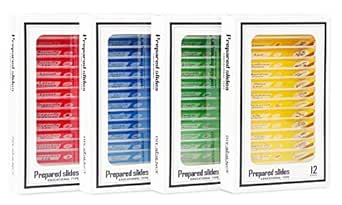 | Best for Beginner-Friendly Handling | Quantity: 48 prepared slides | Material: Plastic | Specimens: Plants, flowers, insects, and animal tissue | VIEW LATEST PRICE | See Our Full Breakdown |
| USCAMEL 100 Prepared Microscope Slides with Biological Specimens |  | Best for Broad Biology Coverage | Brand: USCAMEL | Model number: RDMT-WS-642 | Slide count: 100 | VIEW LATEST PRICE | See Our Full Breakdown |
| Microscope Slide Set with Plant, Insect, Animal, and Algae Specimens |  | Best for Beginner Demonstrations | Slide material: Glass | Slide dimensions: 25 mm × 75 mm | Stated slide count: Conflicting: title says 120; description says 30 | VIEW LATEST PRICE | See Our Full Breakdown |
| BOJACK Microscope Slides and Cover Glasses with Droppers, 100 Slides and 200 Covers |  | Best for Hands-On Sample Preparation | Slide quantity: 100 | Cover glass quantity: 200 | Droppers: 4: two 1 ml and two 2 ml | VIEW LATEST PRICE | See Our Full Breakdown |
| Ahviesli Microscope Slides and Cover Slips Kit, 50 Glass Slides and 100 Cover Slips |  | Best for Microscope Compatibility | Brand: Ahviesli | Model: H004 | Slides: 50 blank glass slides | VIEW LATEST PRICE | See Our Full Breakdown |
| Jiusion 60-Piece Prepared Microscope Slide Specimen Set |  | Best Compact Prepared Set | Quantity: 60 slides | Specimens: Plant, insect, and animal tissues | Material: Transparent plastic | VIEW LATEST PRICE | See Our Full Breakdown |
| United Scientific Pre-Cleaned Glass Microscope Slides, 3 x 1 in, 72 Pack |  | Best for Blank-Slide Practice | Quantity: 72 slides | Material: Glass | Dimensions: 3 × 1 in (75 × 25 mm) | VIEW LATEST PRICE | See Our Full Breakdown |
| ZEEGOO Microscope Slides and Coverslips, 50 Slides and 100 Coverslips |  | Best for Learning Specimen Mounting | Slide quantity: 50 | Coverslip quantity: 100 | Slide dimensions: 1 × 3 in | VIEW LATEST PRICE | See Our Full Breakdown |
| LAKWAR Prepared Microscope Slides with Specimens, Set of 30 |  | Best for a Compact Guided Collection | Slide count: 30 | Specimens: Bacteria, fungi, plant organs, mammal tissue, cells, and insect parts | Slide dimensions: 1 × 3 in (25 × 75 mm) | VIEW LATEST PRICE | See Our Full Breakdown |
| DIY-SCIENCE Microscope Slides with Specimens for Kids, 60-Count Prepared Biology Slide Kit |  | Best for Younger Student Study | Slide count: 60 | Material: Glass | Maximum magnification: 1200× | VIEW LATEST PRICE | See Our Full Breakdown |
| 60 Prepared Microscope Slides with Specimens |  | Best for Organized Classroom Sharing | Quantity: 60 slides | Material: Optical glass | Dimensions: 1 × 3 in (25 × 75 mm) | VIEW LATEST PRICE | See Our Full Breakdown |
| microscope slides for student | Material | Slide dimensions |
|---|---|---|
| ScitoLAB 50-Pack Concave Micro | Optical glass | 1 × 3 inches |
| AmScope PS25 Prepared Microsco | — | 75 × 25 × 1 mm |
| Jiusion Prepared Microscope Sl | — | 60 × 21 mm (2.4 × 0.8 in) |
| 48-Piece Prepared Microscope S | Plastic | — |
| 48 Prepared Microscope Slides | Plastic | — |
| USCAMEL 100 Prepared Microscop | Optical glass | — |
| Microscope Slide Set with Plan | — | 25 mm × 75 mm |
| BOJACK Microscope Slides and C | Optical glass | 76.2 × 25.4 mm |
| Ahviesli Microscope Slides and | Glass | — |
| Jiusion 60-Piece Prepared Micr | Transparent plastic | 60 mm × 21 mm (2.4 × 0.8 in) |
| United Scientific Pre-Cleaned | Glass | — |
| ZEEGOO Microscope Slides and C | Optical glass | 1 × 3 in |
| LAKWAR Prepared Microscope Sli | Glass | 1 × 3 in (25 × 75 mm) |
| DIY-SCIENCE Microscope Slides | Glass | — |
| 60 Prepared Microscope Slides | Optical glass | — |
More Details on Our Top Picks
ScitoLAB 50-Pack Concave Microscope Slides
For students learning to examine pond water, suspensions, or other small liquid samples, the ScitoLAB 50-Pack Concave Microscope Slides fills a different role from the prepared-specimen sets here. Its 16 mm concave well holds liquid in place, while the pre-cleaned optical glass is ready for students to add their own samples. Ground edges offer a more comfortable handling experience than sharp-edged glass may, and the standard 1 × 3-inch format suits common compound microscopes. Unlike the AmScope PS25, these slides do not arrive with labeled, preserved specimens, so students need samples and may need to manage cleanup. Choose them for hands-on sample preparation, not for a ready-made lesson collection; their wells also make them less suitable for flat specimens.
Pros:- Concave wells contain small liquid samples during viewing.
- Pre-cleaned optical glass is ready for sample preparation.
- Ground edges support safer handling.
- Reusable slides fit common compound microscopes.
Cons:- The well is designed for small liquid samples rather than flat specimens.
- No prepared or labeled specimens are included, so students must supply samples.
Best for: Students and teachers practicing wet-mount preparation with small liquid samples on a common compound microscope.
Not ideal for: Beginners who want labeled, ready-to-view specimens or students mainly studying flat tissue samples.
- Quantity:50 slides
- Material:Optical glass
- Slide dimensions:1 × 3 inches
- Concave well diameter:16 mm
- Preparation:Pre-cleaned
- Edges:Ground
- Weight:10.2 ounces
- Manufacturer:ScitoLAB
Our verdict“Choose this pack for repeated wet-mount practice; choose the AmScope PS25 if you need prepared specimens ready for a lesson.”
AmScope PS25 Prepared Microscope Slide Set, 25 Slides with Wooden Case
The AmScope PS25 is the clearest choice here for students who need a small, organized collection of specimens they can view without preparing samples first. Its 25 labeled slides cover plant, insect, and animal tissues, giving a beginner several types of material to compare. Optical glass, coverslips, and cedar wood oil preserve the specimens, while the fitted wooden case helps keep the set together between lessons. Compared with the Jiusion 48-piece set, AmScope offers fewer slides and a traditional glass format, but the description gives a straightforward account of specimen groups and preservation. The tradeoff is breadth: it is aimed at basic biology rather than a specialized topic, and students seeking a larger assortment may prefer one of the 48-slide sets.
Pros:- Includes labeled plant, insect, and animal tissue specimens.
- Optical glass supports viewing of prepared samples.
- Coverslips and cedar wood oil preserve the specimens.
- Fitted wooden case helps protect and organize the slides.
Cons:- Includes 25 slides, fewer than the 48-slide Jiusion and other prepared sets.
- Covers basic biology rather than a specialized subject area.
Best for: Students or teachers who want a compact, labeled glass-slide collection for introductory lessons in plant, insect, and animal biology.
Not ideal for: Buyers who prioritize the largest slide count, plastic slides for child handling, or a specialized specimen collection.
- Brand:AmScope
- Model:PS25
- Slide count:25
- Slide material:Optical glass
- Slide dimensions:75 × 25 × 1 mm
- Specimen preservation:Cedar wood oil and coverslip
- Case:Fitted wooden case
- Included items:25 prepared slides and fitted wooden case
Our verdict“Pick the AmScope PS25 for organized, traditional glass specimens in a compact set, rather than maximum variety.”
Jiusion Prepared Microscope Slides Specimen Set, 48 Pieces
Among the student sets with prepared specimens, the Jiusion 48-piece set stands out for splitting its collection into four boxes of 12. That layout can make it easier to keep a class activity or home study session organized than a single undivided batch. Labeled plant, insect, and animal specimens offer broad introductory coverage, while smooth-edged plastic slides avoid the sharp corners associated with glass. Compared with the AmScope PS25, Jiusion supplies nearly twice as many slides and uses plastic, but each slide measures only 60 × 21 mm, smaller than standard. Students should check that this format works with their microscope stage and holders. It is a practical choice for sorting and handling, though not for learners who specifically need standard-size glass slides.
Pros:- Includes 48 prepared specimens across plant, insect, and animal groups.
- Four boxes of 12 help separate and store slides.
- Labels support classification and specimen identification.
- Smooth plastic edges avoid sharp glass corners.
Cons:- Slides are smaller than standard microscope slides.
- Plastic construction does not match the traditional glass format offered by the AmScope PS25.
Best for: Students, families, and educators who want a larger prepared collection divided into manageable groups for sorting and storage.
Not ideal for: Learners who need standard-size glass slides or whose microscope holders cannot accommodate 60 × 21 mm slides.
- Brand:Jiusion
- Number of slides:48
- Packaging:4 boxes of 12 slides
- Slide material:Plastic
- Slide dimensions:60 × 21 mm (2.4 × 0.8 in)
- Specimens:Plants, insects, and animal tissues
- Model number:Jiusion-48Slides
Our verdict“Choose Jiusion for a well-divided plastic specimen set, provided the smaller slide format fits your microscope.”
48-Piece Prepared Microscope Slides Set: Insects, Animals, Flowers, and Plants
This 48-slide set makes its variety easy to understand at a glance: it divides the collection evenly among insects, animals, flowers, and plants, with 12 slides in each group. That clear balance suits students who want to compare several broad specimen categories without choosing a subject-specific kit. Its color labels help with sorting, and the plastic construction has no sharp edges, a handling advantage over the glass AmScope PS25. Like the Jiusion set, though, these slides are smaller than standard at 60 × 20 mm; buyers should confirm their microscope can hold them securely. The description also gives less detail about the individual specimens than AmScope’s, so this is better for broad exploration than for lessons requiring a named, predictable specimen list.
Pros:- Provides 12 slides each for insects, animals, flowers, and plants.
- Color labels make category sorting straightforward.
- Plastic slides have no sharp edges.
- Clear specimens are intended for microscope observation.
Cons:- The 60 × 20 mm format is smaller than standard slides.
- The description does not identify individual specimens in detail.
- Plastic construction differs from the traditional glass format of the AmScope PS25.
Best for: Beginning students who want equal representation from four broad specimen categories and easy-to-sort slides.
Not ideal for: Students needing standard-size glass slides or a detailed list of named specimens for a structured curriculum.
- Quantity:48 slides
- Specimen types:Insects, animals, flowers, and plants
- Quantity per type:12 slides
- Dimensions:60 × 20 × 1 mm
- Material:Plastic
- Labels:Color labels
- Construction:Waterproof and moisture-resistant
Our verdict“Pick this set for balanced exposure to four specimen categories, but verify slide compatibility and accept limited specimen detail.”
48 Prepared Microscope Slides of Animals, Insects, Plants, and Flowers
For younger learners or students handling prepared slides without close adult supervision, the smooth-edged plastic format is the main reason to choose this 48-piece set. It offers labeled plant, flower, insect, and animal tissue specimens for introductory observation, avoiding the need to prepare samples as the ScitoLAB concave slides require. Compared with the four-category set B09P7ZG859, this option also covers those broad groups, but the supplied description does not specify how many slides belong to each or identify the individual specimens. That makes the collection less predictable for a planned lesson. The listing also requires a microscope but does not include one. Choose it for simple, ready-made specimen viewing and handling; skip it if exact specimen selection or glass slides matter to your coursework.
Pros:- Includes prepared plant, flower, insect, and animal tissue specimens.
- Labels support classification and storage.
- Smooth plastic edges avoid sharp glass corners.
- Designed for beginner biology learning.
Cons:- The individual specimens and quantities by category are not specified.
- A microscope is required and is not included.
- Plastic slides do not provide the traditional glass format of the AmScope PS25.
Best for: Beginner students and families seeking labeled prepared specimens with smooth plastic edges for introductory microscope sessions.
Not ideal for: Students who need standard glass slides, a specified number per specimen category, or a named specimen inventory for coursework.
- Quantity:48 prepared slides
- Material:Plastic
- Specimens:Plants, flowers, insects, and animal tissue
- Package dimensions:6.89 × 5.47 × 1.73 inches
- Item weight:6.4 ounces
- Manufacturer:DIY-SCIENCE EDU
- Model number:Biology-PS-Plastic-48pcs
Our verdict“Choose this set for beginner-friendly handling and ready-made specimens, not for a tightly specified lesson plan.”
USCAMEL 100 Prepared Microscope Slides with Biological Specimens
The 100-slide collection offers the broadest stated specimen range among these five picks, spanning bacteria, fungi, human tissues, plants, insects, and animal cells. That variety gives students material for comparing different forms of life without preparing each sample themselves. Its inclusion of mitosis and meiosis specimens also makes it more useful for lessons on cell division than the BOJACK blank-slide kit, which is intended for samples students prepare. Slides arrive mounted and preserved, with reference materials for identification, though the description does not explain what those materials contain. One detail needs checking before purchase: the listed maximum magnification is 20x, which may limit suitability for students who need more detailed viewing. I’d choose it for specimen breadth, not as a substitute for a higher-magnification setup.
Pros:- 100 prepared slides provide a large ready-to-view collection
- Covers bacteria, fungi, human tissues, plants, insects, and animal cells
- Includes mitosis and meiosis specimens for cell-division lessons
- Reference materials can help students identify specimens
Cons:- Maximum magnification is listed as only 20x
- The contents and format of the reference materials are not specified
- The large collection may be more than a beginner needs
Best for: Students or teachers who want a large, ready-made selection covering several biology topics, including cell division.
Not ideal for: Learners who need clearly specified high-magnification study or detailed information about the included identification guide.
- Brand:USCAMEL
- Model number:RDMT-WS-642
- Slide count:100
- Specimen types:Bacteria, fungi, human tissues, plants, insects, and animal cells
- Maximum magnification:20x
- Material:Optical glass
- Light source:LED
- Item weight:750 g
Our verdict“Choose this set for wide specimen coverage and cell-division examples, but verify that its listed 20x maximum fits your microscope and lessons.”
Microscope Slide Set with Plant, Insect, Animal, and Algae Specimens
This set is aimed squarely at introductory biology and demonstrations, with prepared plant, algae, mammalian tissue, cell, and insect specimens. Its polished, rounded glass edges are a useful handling detail for home study or classroom use, where slides may pass between several beginners. Compared with the more expansive USCAMEL 100-slide set, this option’s described specimen range is less broad and its contents are framed for basic education rather than advanced study. The bigger issue is a conflicting slide count: the title says 120, while the description says 30. That makes it hard to judge how much material a buyer will actually receive. I’d resolve that discrepancy with the seller before choosing it; without confirmation, the BOJACK set offers a more clearly stated quantity for students who want supplies they can count on.
Pros:- Includes prepared plant, algae, mammalian tissue, cell, and insect specimens
- Polished, rounded edges support safer handling by beginners
- Designed for home learning and teaching demonstrations
- Glass slides offer a familiar format for introductory microscopy
Cons:- The title and description conflict on whether the set contains 120 or 30 slides
- The stated scope is basic education rather than advanced microscopy
Best for: Parents and teachers seeking prepared specimens for beginner lessons or supervised classroom demonstrations, after confirming the set count.
Not ideal for: Buyers who need a definite quantity before ordering or students looking for specimens suited to advanced microscopy.
- Slide material:Glass
- Slide dimensions:25 mm × 75 mm
- Stated slide count:Conflicting: title says 120; description says 30
- Contents:Prepared plants, algae, mammalian tissues, cells, and insect parts
- Edge finish:Polished, rounded edges
- Intended use:Education, teaching demonstrations, and beginner microscopy
Our verdict“Consider this beginner-friendly demonstration set only after confirming how many slides are included.”
BOJACK Microscope Slides and Cover Glasses with Droppers, 100 Slides and 200 Covers
Unlike the prepared-specimen sets in this roundup, BOJACK supplies the basics for students to make their own slides: 100 optical-glass blanks, 200 cover glasses, and four droppers. That combination suits lessons where collecting, placing, and covering a sample is part of the assignment. The frosted end gives students a place to label each slide, while ground edges and pre-cleaning help with routine handling and setup. Compared with the Ahviesli kit, BOJACK provides twice as many blank slides and twice as many cover glasses, plus droppers; Ahviesli instead describes compatibility with monocular, binocular, and trinocular microscopes. BOJACK specifies use with optical microscopes but does not clarify compatibility with other microscope types. It also offers no prepared examples, so students who want immediate specimen viewing should choose a prepared set such as USCAMEL.
Pros:- Includes 100 slides, 200 cover glasses, and four droppers
- Frosted ends provide space for specimen labels
- Ground edges and pre-cleaned glass support sample preparation
- Optical glass slides are suited to optical microscope use
Cons:- Contains blank slides rather than prepared specimens
- Compatibility with microscope types beyond optical microscopes is not specified
- Glass slides require students to handle and prepare samples carefully
Best for: Students and teachers who plan to collect or prepare their own biological samples and want slides, covers, and droppers together.
Not ideal for: Beginners who want labeled, ready-made specimens or buyers using a microscope type beyond the stated optical-microscope use.
- Slide quantity:100
- Cover glass quantity:200
- Droppers:4: two 1 ml and two 2 ml
- Slide dimensions:76.2 × 25.4 mm
- Slide thickness:1–1.2 mm
- Cover glass dimensions:20 × 20 mm
- Cover glass thickness:0.13–0.17 mm
- Material:Optical glass
Our verdict“Pick BOJACK for practical lessons in preparing samples; choose a prepared-slide set if you want specimens ready to view.”
Ahviesli Microscope Slides and Cover Slips Kit, 50 Glass Slides and 100 Cover Slips
Ahviesli is a blank-slide kit for students who want to prepare samples rather than view pre-mounted specimens. It includes 50 pre-cleaned glass slides and 100 cover slips, with polished edges and clipped corners intended to make routine handling easier. Its clearest advantage over BOJACK is the stated fit with monocular, binocular, and trinocular microscopes; BOJACK identifies optical microscopes but does not give the same range of compatible configurations. The tradeoff is a smaller supply and fewer included tools: BOJACK provides 100 slides, twice the cover count, and four droppers. Ahviesli also lists unusual optical figures—maximum magnification of 8.1× and a real angle of view of 6—without explaining their relevance to the slides. I’d treat it as a basic consumables kit, not a prepared specimen collection.
Pros:- Includes 50 pre-cleaned glass slides and 100 cover slips
- Polished edges and clipped corners aid handling
- Lists compatibility with monocular, binocular, and trinocular microscopes
Cons:- Blank slides require students to supply and prepare specimens
- Includes fewer slides and no droppers, unlike the BOJACK kit
- The listed magnification and angle-of-view figures are not explained
Best for: Students or classrooms that need pre-cleaned blank slides and cover slips for a monocular, binocular, or trinocular microscope.
Not ideal for: Learners seeking ready-to-view specimens, a large supply of slides, or a kit with sample-preparation tools such as droppers.
- Brand:Ahviesli
- Model:H004
- Slides:50 blank glass slides
- Cover slips:100
- Material:Glass
- Dimensions:4 × 2.56 × 0.96 in
- Maximum magnification:8.1× (as listed)
- Microscope compatibility:Most monocular, binocular, and trinocular microscopes
Our verdict“Choose Ahviesli for a straightforward blank-slide supply with broad stated microscope compatibility, not for prepared samples or extra tools.”
Jiusion 60-Piece Prepared Microscope Slide Specimen Set
Jiusion’s 60 prepared slides put plant, insect, and animal tissues into five boxes of 12, with classification labels that can help students sort specimens and return them to storage. The transparent plastic construction and smooth edges make this set different from the glass collections here, while its smaller-than-standard format can make the slides less convenient to handle or use with equipment designed around standard slides. Compared with the USCAMEL 100-slide set, Jiusion offers fewer specimens and a narrower stated range, but its five-box organization gives it a tidy structure for lessons or sharing across groups. The description does not state which particular specimens are included, so buyers cannot plan around specific examples. I’d pick it for compact, labeled classroom organization, not for students who need standard-size glass slides or a broad catalog of specimen types.
Pros:- Provides 60 prepared slides featuring plant, insect, and animal tissues
- Classification labels help with identification and sorting
- Five boxes of 12 make the collection easier to organize or share
- Smooth-edged transparent plastic slides avoid glass construction
Cons:- Slides are smaller than standard microscope slides
- Plastic may not suit students who specifically need glass slides
- The description does not identify individual specimens
Best for: Teachers and families who want a compact, organized set of prepared specimens for introductory lessons and group sharing.
Not ideal for: Students whose microscope accessories require standard-size slides or buyers who need a detailed specimen list.
- Quantity:60 slides
- Specimens:Plant, insect, and animal tissues
- Material:Transparent plastic
- Slide dimensions:60 mm × 21 mm (2.4 × 0.8 in)
- Packaging:5 boxes of 12 slides
- Size note:Smaller than standard microscope slides
- Slide features:Smooth edges and classification labels
Our verdict“Choose Jiusion for an organized, compact prepared set, provided its smaller plastic slides suit your microscope and lesson needs.”
United Scientific Pre-Cleaned Glass Microscope Slides, 3 x 1 in, 72 Pack
For students who want to prepare their own specimens, this 72-slide blank set offers more room to practice than the 50-slide ZEEGOO kit, though ZEEGOO also supplies coverslips. The pre-cleaned surfaces are ready for mounting, while ground edges make routine handling more comfortable than slides with untreated edges. Standard 3 × 1-inch dimensions fit common student microscopes, including monocular, binocular, and trinocular models. Vacuum-sealed packaging helps keep unused slides protected in storage. The tradeoff is that these are plain slides, not a guided specimen collection: students must source or prepare samples themselves, and coverslips are not included. I’d choose this for repeated lessons in slide preparation, but a beginner wanting ready-to-view examples should look at the LAKWAR prepared set instead.
Pros:- 72 pre-cleaned slides provide plenty for repeated classroom practice
- Ground edges make handling more comfortable
- Standard size fits monocular, binocular, and trinocular microscopes
- Vacuum-sealed packaging helps protect unused slides
Cons:- No prepared specimens or identification guide
- Coverslips must be purchased separately for preparations that need them
Best for: Students and teachers practicing specimen mounting who need a larger supply of standard blank slides.
Not ideal for: Beginners who want labeled specimens to examine immediately or buyers who need coverslips included.
- Quantity:72 slides
- Material:Glass
- Dimensions:3 × 1 in (75 × 25 mm)
- Thickness:1.0–1.2 mm
- Edges:Ground
- Surface:Pre-cleaned
- Compatibility:Monocular, binocular, and trinocular microscopes
- Packaging:Vacuum-sealed
Our verdict“Choose this set for hands-on slide-preparation practice; pick a prepared kit if students need specimens ready to view.”
ZEEGOO Microscope Slides and Coverslips, 50 Slides and 100 Coverslips
The ZEEGOO kit is the most directly useful choice here for students learning to make their own wet mounts: it pairs 50 pre-cleaned slides with 100 coverslips, so there are covers available for every slide and extras for practice. That gives it a more complete starting setup than the United Scientific 72-pack, which supplies more slides but no coverslips. The ground edges and clipped corners offer a more considered handling design, and the set is listed as compatible with standard and USB microscopes. The limits are practical: thin 0.15 mm coverslips require careful handling, and glass pieces can break if dropped or pressed too hard. Unlike the LAKWAR prepared set, this kit doesn’t provide specimens or a guide, so students need samples and some instruction.
Pros:- Includes 50 slides and 100 coverslips for mounting practice
- Pre-cleaned optical glass is ready for specimen preparation
- Ground edges and clipped corners aid handling
- Compatible with monocular, binocular, trinocular, and USB microscopes
Cons:- Thin coverslips need careful handling and can break
- No prepared specimens or identification guide is included
Best for: Homeschoolers and classroom students learning to prepare plant, pond-water, or other specimens under adult guidance.
Not ideal for: Students who want a collection of labeled, ready-made specimens or anyone likely to handle thin glass roughly.
- Slide quantity:50
- Coverslip quantity:100
- Slide dimensions:1 × 3 in
- Coverslip dimensions:22 × 22 mm
- Coverslip thickness:0.15 mm
- Material:Optical glass
- Slide preparation:Pre-cleaned
- Edges:Ground with 45° clipped corners
Our verdict“Pick ZEEGOO for a ready-to-use mounting setup, but choose prepared slides if the goal is immediate specimen viewing.”
LAKWAR Prepared Microscope Slides with Specimens, Set of 30
LAKWAR takes a smaller, more study-focused approach than the 60-slide DIY-SCIENCE kit: its 30 labeled specimens cover bacteria, fungi, plant organs, mammal tissue, cells, and insect parts, with a specimen list to help students connect each slide to its subject. That makes the set a sensible fit for a first survey of biological samples without filling a large case. A storage case and cleaning cloth are included, supporting organized handling between lessons. The main tradeoff is quantity: students who want a larger collection or more examples to share among a class may prefer DIY-SCIENCE’s 60-slide assortment. This is also a prepared-only set, so it offers less practice in collecting and mounting fresh specimens than the ZEEGOO slide-and-coverslip kit. Its educational positioning suits beginners, not advanced coursework.
Pros:- Covers bacteria, fungi, plant organs, mammal tissue, cells, and insect parts
- Labels and specimen list support identification during study
- Includes a storage case and cleaning cloth
- Standard 1 × 3-inch glass slides suit common student microscopes
Cons:- 30 slides provide a smaller collection than the 60-slide DIY-SCIENCE kit
- Prepared specimens do not teach students how to mount their own samples
- Positioned for beginner and educational use rather than advanced study
Best for: A student or homeschool learner who wants a manageable, labeled introduction to several types of biological specimens.
Not ideal for: Teachers outfitting a larger group or students seeking a broad collection with many slides of each subject.
- Slide count:30
- Specimens:Bacteria, fungi, plant organs, mammal tissue, cells, and insect parts
- Slide dimensions:1 × 3 in (25 × 75 mm)
- Material:Glass
- Included items:Slide case, specimen list, and cleaning cloth
- Warranty:1 year
- Manufacturer part number:QJKJ-H24-066
Our verdict“Choose LAKWAR for a compact, labeled starter collection, and choose a larger kit when shared classroom use is the priority.”
DIY-SCIENCE Microscope Slides with Specimens for Kids, 60-Count Prepared Biology Slide Kit
DIY-SCIENCE is aimed squarely at school-age learners, pairing 60 prepared specimens with color-coded labels, an identification chart, and a storage case. That guidance gives it an advantage over the LAKWAR 30-slide set for students who benefit from a larger, more organized assortment, while LAKWAR is the more compact option. Its stated compatibility spans compound, stereo, USB/digital, and pocket microscopes, making it flexible for households with different student setups. The kit’s 1200× maximum magnification is a compatibility claim, not a promise that every microscope will produce useful detail at that power. Glass also remains breakable, and the listed age range of 8–12 may not suit younger children without close supervision. Compared with ZEEGOO, this is for viewing prepared material rather than practicing slide preparation.
Pros:- 60 prepared slides span plant, animal, insect, microbial, tissue, and cell specimens
- Color-coded labels and identification chart help guide study
- Protective storage case keeps the collection organized
- Listed compatibility includes compound, stereo, USB/digital, and pocket microscopes
Cons:- Glass slides can break even when stored in the case
- The 8–12 age guidance may not fit younger learners without supervision
- Prepared slides do not provide practice mounting fresh specimens
Best for: Families or teachers supporting children aged 8–12 who want labeled prepared slides and an identification chart.
Not ideal for: Younger children who need non-glass materials, or students whose main goal is learning to prepare their own slides.
- Slide count:60
- Material:Glass
- Maximum magnification:1200×
- Light source:LED
- Compatible devices:Compound, stereo, USB/digital, and pocket microscopes
- Included:Prepared specimen slides, storage case, and identification chart
- Age guidance:8–12 years
Our verdict“Choose this for guided specimen viewing with school-age students; choose ZEEGOO instead for hands-on mounting lessons.”
60 Prepared Microscope Slides with Specimens
This 60-slide collection is a strong fit when students need an assortment that stays easy to sort between lessons. Its individual storage slots separate the labeled specimens, while polished, frosted edges offer a more finished handling surface than the basic blank United Scientific slides. The range includes bacteria, fungi, algae, plant organs, animal tissues, cells, and insect parts, with a matching catalog to support identification. Compared with DIY-SCIENCE’s similarly sized prepared kit, the standout here is the stated frosted-edge finish and slotted tray; DIY-SCIENCE instead highlights color coding and broad microscope compatibility. The tradeoff is that the supplied details don’t specify microscope compatibility or magnification, so students should check fit against their equipment. These are glass slides with small parts, not a set for unsupervised children under three.
Pros:- 60 prepared slides cover a wide range of biological specimens
- Matching catalog and labels aid specimen identification
- Individual tray slots help organize and protect slides
- Polished, frosted edges provide a finished edge surface
Cons:- Glass slides can break if mishandled
- Small parts make the set unsuitable for children under three
- Microscope compatibility and magnification are not specified in the supplied details
Best for: Teachers and student groups who want a labeled, varied collection that can be returned to individual tray slots after use.
Not ideal for: Buyers who need stated compatibility or magnification details, or families with children under three.
- Quantity:60 slides
- Material:Optical glass
- Dimensions:1 × 3 in (25 × 75 mm)
- Specimens:Bacteria, fungi, algae, plant organs, animal tissues, cells, and insect parts
- Slide features:Labeled slides with polished, frosted edges
- Storage:Individual slots in a storage tray
- Recommended age:8–12 years
- Safety:Choking hazard; not for children under 3
Our verdict“Choose this collection for organized, shared specimen study, but verify microscope fit if equipment compatibility is a deciding factor.”

How We Picked
I compared these 15 products by asking how well each supports a student’s actual microscope work: whether it is ready to view or requires slide preparation, how useful the stated set size is for learning, and whether the format and included accessories fit the intended activity. I also weighed storage and handling cues, such as a case or supplied coverslips, because loose slides can be difficult for students to sort and protect. Product names and listed contents do not establish specimen quality or compatibility with every microscope, so I treat those as points for buyers to verify rather than assumed advantages.
The ranking gives priority to student usability and a clear learning purpose, not the largest count. Prepared sets rank well when they let a learner begin observing promptly; blank-slide kits rise for students who need hands-on sample preparation; specialized concave slides rank lower for general use but make sense for liquid samples. Where products appear similar, I distinguish them by stated count, included components, and likely role, while noting that buyers should check the listing for specimen details and storage before choosing.
| microscope slides for student | Material |
|---|---|
| ScitoLAB 50-Pack Concave Micro | Optical glass |
| AmScope PS25 Prepared Microsco | — |
| Jiusion Prepared Microscope Sl | — |
| 48-Piece Prepared Microscope S | Plastic |
| 48 Prepared Microscope Slides | Plastic |
| USCAMEL 100 Prepared Microscop | Optical glass |
| Microscope Slide Set with Plan | — |
| BOJACK Microscope Slides and C | Optical glass |
| Ahviesli Microscope Slides and | Glass |
| Jiusion 60-Piece Prepared Micr | Transparent plastic |
| United Scientific Pre-Cleaned | Glass |
| ZEEGOO Microscope Slides and C | Optical glass |
| LAKWAR Prepared Microscope Sli | Glass |
| DIY-SCIENCE Microscope Slides | Glass |
| 60 Prepared Microscope Slides | Optical glass |
Factors to Consider When Choosing Microscope Slides For Students
Before choosing a set, decide what the student should be able to do after opening it. A prepared collection supports observation right away, while blank slides and coverslips make sample preparation part of the lesson. The factors below help avoid paying for a large count that does not match the learning goal.
Prepared Specimens or Blank Slides?
Prepared slides arrive with specimens mounted, so a student can focus on illumination, magnification, and describing what appears in view. Blank slides require the learner to collect or supply a sample and prepare it, which adds useful practice but also more steps and cleanup. A common mismatch is buying a prepared set for a class assignment that requires students to make their own slides. The reverse can happen too: a beginner may receive blank glass but have no samples, coverslips, or instructions ready. Check the activity plan before choosing, and treat mixed kits as useful only when their contents clearly support both tasks. Prepared does not necessarily mean every slide is suitable for every lesson, so review the specimen list where available.
Choose a Set Size That Will Get Used
A bigger prepared set can expose students to more specimen types, but quantity alone says little about how clearly the subjects are identified or organized. For a first microscope, a smaller collection can be easier to revisit and discuss than dozens of slides opened all at once. Larger sets make more sense for a classroom, siblings sharing a kit, or a learner who already knows they want broad comparisons. Check whether the product identifies what is included and how the slides are stored; a high count without a practical sorting method can create avoidable handling problems. With blank slides, count the coverslips too, since students may need them for each wet mount. Buy for the expected number of activities, not the headline number.
Match Slide Type to the Sample
Standard flat slides cover many common prepared specimens and basic sample-making tasks. Concave slides have a recessed area that can hold liquid or thicker samples, making them useful for certain observations but less versatile as an all-purpose student set. Buyers sometimes choose concave slides because they sound more specialized, then find that ordinary prepared specimens or routine classroom work call for flat slides instead. Think about whether the student will examine pond water, other liquids, or material that needs extra space beneath a coverslip. If the microscope lesson uses mounted slides supplied by a teacher, standard slides may be the more relevant purchase. Confirm slide dimensions and microscope-stage fit if the equipment is unusual or very small.
Look Beyond the Slide Count to the Accessories
Coverslips, droppers, and storage cases can change how readily a student can start and how much care the kit needs between sessions. A blank-slide kit with coverslips supports wet-mount practice, while a case can help keep prepared specimens arranged and protected. Do not assume that a kit includes every tool needed to collect, mount, or clean samples; check the included-items list. Extra accessories are useful only if they match the planned activity and are safe and manageable for the student. A large bundle can also take more space and create more pieces to track. If the kit lacks a storage case, plan a safe, labeled place for slides before opening it.
Set Age-Appropriate Expectations for Preparation
Prepared slides reduce setup demands, which can help younger learners spend more time observing and less time handling glass. Making slides from scratch offers a richer exercise for students who can follow careful handling and cleanup routines. A frequent mistake is treating a children’s label as a substitute for checking supervision needs, included tools, or handling instructions. Glass slides and coverslips can break, so adult guidance may be appropriate even when the specimen subjects are kid-friendly. For independent use, consider whether the student can keep track of small coverslips and return slides to storage after viewing. If the goal is a first successful microscope session, start with ready-mounted specimens and add sample preparation later.
Verify Specimen Variety and Compatibility
Descriptions such as plants, insects, and animals suggest broad subject areas, but they do not tell you which specimens are included or how they are labeled. When a particular topic matters for schoolwork, look for a detailed specimen list rather than relying on a broad category name. Also check whether the slides are intended for the student’s microscope and whether their dimensions match its stage and clips. A prepared set may be educationally varied yet still miss the exact organism or tissue required by a lesson. For blank-slide work, make sure the student has access to safe samples and any additional supplies the activity calls for. This quick check can prevent a mismatch that no larger slide count would fix.
Frequently Asked Questions
Should I buy prepared slides or blank slides for a student’s first microscope?
For a first session, prepared slides are usually the easier choice because the student can start observing without collecting and mounting a sample. Blank slides make more sense when the student has a planned activity, access to suitable samples, and guidance on preparing them. If the learner is curious about both viewing and making slides, compare a prepared set with a separate blank-slide kit rather than assuming one type replaces the other. Consider the student’s patience and handling skills as well as age. A prepared set can build confidence first, with sample-making added once microscope use feels familiar.
Is a 100-slide prepared set a better choice than a smaller student set?
Not by count alone. A larger set may offer more subjects for repeated exploration or shared classroom use, but it can also be harder to sort and may include more slides than one student will use. A smaller set with a case can be more manageable for a beginner who needs a dependable starting collection. Check the specimen list, labeling, and storage before comparing totals. If the set does not identify what the slides show, the extra quantity may add less learning value than expected.
Do students need coverslips with microscope slides?
Students generally need coverslips when making wet mounts or preparing many samples on blank slides, since a coverslip helps hold the sample in place and protects the microscope objective from direct contact. Prepared slides are already mounted, so they do not usually require the student to add a coverslip before viewing. Check the activity instructions and kit contents before buying extras; a pack that includes coverslips may be a better fit for sample preparation, but not necessary for a prepared-only collection. Coverslips are small and fragile, so storage and supervision matter. Avoid assuming that every slide type or lesson uses them in the same way.
When are concave microscope slides worth choosing for students?
Concave slides are useful when a student needs a recessed area to hold liquid or a thicker sample, such as for some fluid observations. They are not a general replacement for flat slides used with prepared specimens or routine slide-making exercises. If the student’s lessons focus on standard mounted samples, a concave-only pack may leave them without the format they need most. Check the planned activity and microscope setup before choosing this specialized style. For broader student use, a standard flat-slide kit is usually the more flexible starting point.
What should I check before buying a prepared slide set for a school assignment?
Start with the assignment’s required specimen types and whether students must observe mounted samples or prepare their own. Then check that the product listing identifies the included specimens well enough to match the lesson, rather than relying only on broad labels such as plants or insects. Confirm the slide dimensions suit the student’s microscope and look for clear storage arrangements if the set will travel between home and school. Ask whether the assignment requires coverslips, droppers, or other tools that a prepared set may not include. If the exact required specimen is not confirmed, contact the seller or choose a set with a clearly stated contents list.
Conclusion
For most students, I recommend the AmScope PS25 as the best overall choice: its prepared specimens and wooden case make it a practical starting point without committing to a very large collection. For a broader ready-to-view assortment, the Jiusion 48-Piece Set is my value-oriented pick, while USCAMEL’s 100 Prepared Slides is better suited to classrooms or learners who want a wide range and can manage a larger set. Beginners who want to start observing with minimal setup should choose a prepared collection; students practicing wet mounts should look to BOJACK, Ahviesli, or ZEEGOO for blank slides and coverslips. For liquid or thicker samples, ScitoLAB’s concave slides serve a more specific purpose than the general sets. Choose according to the student’s next lesson, not the largest number on the package.
Halloween Picks
halloween
As an affiliate, we earn on qualifying purchases.




![Terence Tao: Math 2.0 [Pdf]](https://listof.org/wp-content/uploads/2026/10/terence-tao-math-2-0-pdf-featured-260x140.jpg)