
When choosing a backup generator for home use, the main concern is reliable power during outages without breaking the bank. The Westinghouse 12500 Watt Dual Fuel Generator stands out as the top overall pick for its power capacity and versatility. The Power Equipment 4400 Watts Inverter Generator offers quieter operation and fuel efficiency, making it a great choice for those prioritizing comfort. However, the key tradeoffs involve balancing upfront cost, noise levels, fuel type, and portability. Keep reading for a detailed breakdown that helps you understand which generator fits your specific needs and budget.
Key Takeaways
- Top picks differ mainly by power capacity, with larger models suited for whole-house backup and smaller ones ideal for essential circuits.
- Fuel type and efficiency significantly impact ongoing costs and convenience; dual-fuel models offer flexibility but come at a higher price.
- Inverter generators tend to be quieter and more fuel-efficient but often have lower power output compared to traditional models.
- Portability features like wheels and handles matter if you plan to move the generator frequently or use it for outdoor activities.
- Price ranges vary widely, with premium models offering advanced features and durability, while budget options balance performance with cost.




More Details on Our Top Picks
WEN 5600-Watt Portable Generator with Electric Start, CO Shutdown Sensor, and Transfer Switch
The WEN 5600-Watt Portable Generator stands out for its combination of power, safety features, and ease of use. With 5600 starting watts, it can handle most home essentials during outages, especially when paired with the included transfer switch. The electric start simplifies operation compared to pull-start models like the inverter generator, and the CO shutdown sensor adds a layer of safety often missing in budget options. Compared with inverter generators, this provides more raw power but at the cost of increased noise and weight. It’s best suited for homeowners who need reliable backup power and can handle its size and weight.
Pros:- Powerful enough for most home appliances
- Electric start for quick, easy ignition
- Includes safety features like CO shutdown sensor
- Long runtime of up to 12.5 hours at half load
Cons:- Heavy and less portable, requiring assistance to move
- Limited outlet options may require adapters
- Higher initial cost compared to smaller or inverter models
Best for: Homeowners who want a high-capacity, safe backup with easy operation
Not ideal for: Individuals seeking a lightweight, ultra-portable solution or quiet operation
- Power:5600 starting watts / 4500 running watts
- Engine:224cc
- Fuel Tank Capacity:4.3 gallons
- Run Time:up to 12.5 hours at half load
- Outlets:Two 120V 5-20R, one 120V 30-amp RV, one 120V 30-amp twist lock
- Warranty:3 years
Bottom line: This generator offers a strong balance of power and safety features, making it ideal for homeowners needing dependable backup power.
Power Equipment 4400 Watts Inverter Generator Gas Powered, Portable Open Frame Generator, Low Noise with ECO Mode, RV Ready, Emergency Home Backup
The Power Equipment 4400-Watt Inverter Generator makes a compelling case for those needing a quieter, lightweight backup. With a noise level under 72 dBA and a weight of only 56 lbs, it’s much easier to move than larger portable units like the Westinghouse 14500. Its 14-hour runtime at 25% load and low THD make it suitable for sensitive electronics, but the slightly higher price for inverter technology might be a tradeoff for some users. This pick works well for RV owners or small households where noise and portability matter most.
Pros:- Quiet operation under 72 dBA
- Lightweight and portable design
- Long runtime with fuel gauge
- Low Total Harmonic Distortion (THD) safe for electronics
Cons:- Limited runtime at high loads compared to larger units
- Slight smell of gas upon arrival may concern sensitive users
Best for: People seeking a lightweight, quiet backup for electronics and small appliances
Not ideal for: Homes requiring high power for large appliances or extended outages beyond 14 hours
- Peak Watts:4400
- Running Watts:3400
- Fuel Tank Capacity:2 gallons
- Runtime at 25% load:up to 14 hours
- Noise Level:under 72 dBA
- Weight:56 lbs
Bottom line: This inverter generator is perfect for quiet, portable backup needs, especially when handling sensitive electronics in small households or RV setups.
Westinghouse 14500 Peak Watt Tri-Fuel Portable Generator with Remote Electric Start
The Westinghouse 14500 Peak Watt Generator is a powerhouse designed for serious backup or jobsite use. Its tri-fuel capability offers flexibility, allowing use of gasoline, propane, or natural gas, which extends runtime and provides versatility during long outages. The remote electric start adds convenience, and its low THD makes it safe for sensitive electronics. Compared with smaller models like the WEN 5600, this unit is heavier and less portable, but it delivers significantly more power for larger appliances and multiple circuits. This generator is best suited for those who need robust, extended backup or work in remote locations.
Pros:- Massive 14,500 peak watts and 11,500 running watts
- Tri-fuel capability for flexible fuel options
- Long runtime up to 19 hours with gasoline
- Remote electric start for convenience
Cons:- Heavy and bulky, challenging to transport
- High fuel consumption at full load
- Residual odor after factory testing may bother sensitive users
Best for: Homeowners with high power demands or those needing extended backup during prolonged outages
Not ideal for: Individuals seeking a lightweight, portable unit for occasional use or small households
- Peak Watts:14,500
- Running Watts:11,500
- Fuel Types:Gasoline, Propane, Natural Gas
- Fuel Tank Capacity:9.5 gallons
- Runtime:up to 19 hours (gasoline)
- Start Type:Remote electric start
Bottom line: This tri-fuel generator excels for extended, heavy-duty backup or outdoor work, though its weight limits portability for typical home use.
WEN 4,750-Watt Dual Fuel Portable Generator with Electric Start and Wheel Kit
This WEN model stands out for its dual fuel capability, allowing users to switch between gasoline and propane, which offers greater flexibility during power outages. Compared to the Westinghouse 12500 Watt generator, it is more portable and easier to handle, though it provides less total power. Its electric start simplifies operation, especially for those who prefer quick setup, but it’s bulkier and heavier than compact models like the EF ECOFLOW DELTA 2. The long runtime of up to 11 hours at half load makes it suitable for extended outages, but regular maintenance is needed to keep it running smoothly. Overall, this generator is a versatile choice for those needing reliable backup with manageable complexity.
Pros:- Dual fuel capability for flexible fuel options
- Electric start for quick, easy operation
- Up to 11 hours runtime at half load
- Multiple outlets including GFCI and twist lock
Cons:- Relatively heavy and bulky to transport
- Limited runtime at full load
- Requires regular maintenance for optimal performance
Best for: Homeowners who want a reliable dual-fuel generator with decent power and portability for emergency use
Not ideal for: Users seeking the lightest, most compact backup option or those who need to run very high-demand appliances simultaneously
- Power:4750 surge watts / 3800 running watts (gasoline), 4350 surge / 3500 running watts (propane)
- Voltage:120V/240V
- Engine:224cc 4-stroke OHV
- Tank Capacity:4 gallons
- Run Time:Up to 11 hours at half load
- Outlets:Two 120V GFCI, 120V/240V twist lock, 12V DC
Bottom line: This model makes the most sense for homeowners needing a versatile, easy-to-start generator with reasonable portability.
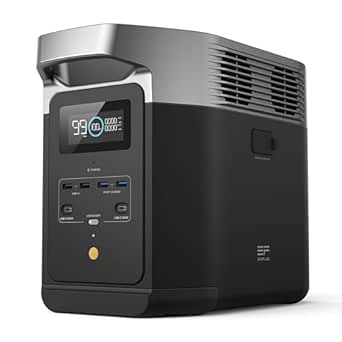
EF ECOFLOW Portable Power Station DELTA 2, 1024Wh LiFePO4 Battery, 1800W AC/100W USB-C, Solar Generator for Home, Camping & RVs
The EF ECOFLOW DELTA 2 is designed for those who prioritize clean, quiet, and expandable power sources. Its 1024Wh LiFePO4 battery provides a stable 1800W AC output and quick recharge times, outperforming many traditional generators in convenience. Unlike the WEN dual fuel, it relies solely on stored or solar energy but offers a longer cycle life of over 3000 cycles, making it ideal for long-term off-grid use or regular emergency backup. Its ability to expand capacity up to 3kWh means it can support larger devices over longer periods, but its solar input capacity is somewhat limited for rapid recharging. This makes it better suited for users who value quiet operation and long lifespan over raw power or quick refill times.
Pros:- Fast charging from 0-80% in 50 minutes
- Expandable capacity up to 3kWh
- Long-lasting LiFePO4 battery with 3000+ cycles
- Multiple outlets for various devices
Cons:- High price compared to traditional generators
- Limited solar input for rapid recharge
- Additional batteries needed for maximum capacity
Best for: Homeowners wanting a quiet, environmentally friendly backup with expandable capacity for long-term outages or camping
Not ideal for: People needing to power very high-demand appliances or seeking a lightweight, portable generator for frequent transport
- Battery Capacity:1024Wh
- Battery Chemistry:LiFePO4 (LFP)
- AC Output:1800W
- USB-C Output:100W
- Solar Input:Up to 500W
- Cycle Life:3000+ cycles
Bottom line: This pick is best for users focused on long-term, quiet backup power with expansion capabilities rather than immediate high-power needs.
4400-Watt Inverter Generator Gas Powered Emergency Backup RV Ready
This inverter generator offers a balance of power and portability, with 4400 peak watts and 3400 running watts, making it suitable for RVs and small home backup. Compared to larger models like the Westinghouse 12500 Watt, it’s much easier to carry at just 56 pounds, and inverter technology ensures quieter operation and cleaner power for sensitive electronics. Its 14-hour runtime on a 2-gallon tank is respectable, but limited for extended outages or high-demand appliances. The RV-ready 30A outlet makes it a strong choice for campers, though it may fall short for powering larger appliances during prolonged outages. It’s ideal for users who prioritize portability and quiet operation over raw power capacity.
Pros:- Powerful enough for many emergency and camping needs
- Lightweight and portable at only 56 lbs
- Inverter technology for quiet, stable power
- Includes RV-ready 30A outlet
Cons:- Limited runtime of 14 hours on 2 gallons
- Not suitable for very high-demand appliances
- Less power capacity compared to larger standby generators
Best for: RVers and homeowners needing a lightweight, efficient backup generator for moderate loads
Not ideal for: Those who require continuous high power or plan to run multiple large appliances simultaneously for long periods
- Wattage:4400 watts
- Fuel Type:Gasoline
- Power Source:Fuel Powered
- Voltage:120V
- Additional Features:Cold Start, Fuel Efficiency, Low Oil Shutdown
- Tank Volume:2 Gallons
Bottom line: This generator is best for RV owners or campers seeking a portable, quiet backup solution for moderate power needs.
WEN 6800-Watt Dual Fuel RV-Ready Electric Start Portable Inverter Generator with CO Watchdog
The WEN 6800-Watt model provides significantly more power than smaller inverters like the 4400-watt unit, making it suitable for larger appliances or more comprehensive home backup. Its dual fuel capability offers flexibility, similar to the Westinghouse WGen9500DF, but with added safety features such as the CO Watchdog sensor and fuel shutoff. While it’s heavier and bulkier, weighing more than 70 pounds, it’s designed for serious power needs, especially in RV or backup scenarios. Its 3-year warranty adds confidence, but the size and weight could be limiting for users seeking a truly portable unit. This generator is ideal for those who need serious power and safety features but are okay with a heavier setup.
Pros:- High surge wattage of 6800 watts
- Dual-fuel flexibility for convenience
- Includes safety features like CO Watchdog sensor
- Multiple outlets for versatile use
Cons:- Heavy and bulky—over 70 pounds
- Higher price point due to features
- Limited portability for frequent transport
Best for: Homeowners or RV owners requiring high wattage with advanced safety features for backup or heavy-duty use
Not ideal for: Users who prioritize portability above all or have very limited space for larger units
- Engine Displacement:224cc
- Fuel Types:Gasoline, Propane
- Surge Power:6800 watts (gas), 6000 watts (propane)
- Rated Power:5100 watts (gas), 4500 watts (propane)
- Receptacles:L14-30R 120V/240V, two 120V, TT-30R RV, 12V DC, two USB
- Warranty:3 years
Bottom line: This generator is best suited for users needing substantial power with safety features, accepting its size and weight.
Westinghouse 12500 Watt Dual Fuel Portable Generator with Remote Electric Start
The Westinghouse WGen9500DF offers the highest power output in this lineup, with 12,500 peak watts and 9,500 running watts, ideal for running multiple large appliances during outages. Its remote electric start adds convenience, especially during emergencies when quick power-up is necessary. Compared to the WEN 4,750-Watt generator, it provides significantly more power but at the expense of increased weight and size, making transport more challenging. Its 6.6-gallon tank and up to 12 hours runtime support extended outages, but regular maintenance is required to keep it performing reliably. If you need serious, high-capacity backup power and don’t mind the weight, this model makes a strong case.
Pros:- Massive power output suitable for large appliances
- Remote electric start for quick operation
- Long runtime of up to 12 hours on a full tank
- Multiple outlets including transfer switch and RV-ready
Cons:- Heavy and bulky, difficult to transport without wheels
- Higher price point
- Requires regular maintenance for longevity
Best for: Homeowners needing reliable, high-capacity backup power with remote start and long runtime
Not ideal for: Those seeking a lightweight, portable solution or with limited storage space
- Peak Watts:12500
- Running Watts:9500 (Gasoline), 8500 (Propane)
- Fuel Type:Gasoline, Propane
- Engine:457cc 4-Stroke OHV
- Run Time:Up to 12 hours
- Fuel Tank Capacity:6.6 gallons
Bottom line: This generator is perfect for users who prioritize high power capacity and remote operation over portability or size constraints.
How We Picked
I evaluated these backup generators based on performance, ease of use, build quality, fuel options, noise levels, and value for money. I prioritized models that deliver reliable power, especially during prolonged outages, while also considering user convenience features like electric start and portability. The ranking reflects a balance between overall capacity, versatility, and cost-effectiveness, ensuring options suit different home sizes and budgets. These products represent the best combination of features and reliability within their respective categories, helping buyers make informed decisions based on their specific needs.Factors to Consider When Choosing Backup Generators Home
Choosing the right backup generator for your home involves weighing several key factors. The right model depends on your power needs, budget, and how you plan to use it. Understanding the tradeoffs between size, fuel type, noise, and portability can help prevent costly mistakes and ensure you get a generator that truly supports your home during emergencies.Power Capacity and Load Management
Assess your home’s essential power needs—such as refrigerators, heating systems, and lighting—before choosing a generator. Larger models provide enough wattage for the entire house, but they come at a higher cost and size. Compact or inverter models are best for powering critical circuits or smaller appliances. Avoid overestimating your needs, as a generator that’s too large can be inefficient, while one too small won’t meet your demands when it counts most.
Fuel Type and Efficiency
Generators run on different fuels—gasoline, propane, diesel, or dual-fuel options. Gasoline models are common but require frequent refueling, especially during long outages. Propane offers cleaner burning and longer storage but may require additional setup. Dual-fuel units provide flexibility but tend to be pricier and slightly less efficient. Consider your local fuel availability and storage capacity when making a choice to avoid inconveniences during extended outages.
Noise Levels and Location
Noise can be a significant consideration, especially if the generator will run near living areas or outdoor spaces. Inverter models tend to operate more quietly, making them suitable for residential settings. Larger traditional generators can be noisy, requiring soundproofing or strategic placement. Remember that a louder generator may require additional clearance or sound dampening measures, which can increase installation complexity and cost.
Portability and Installation
If you need a generator that’s easy to move around or store, look for models with wheels, handles, and compact design features. Fixed installations, like transfer switch setups, offer seamless power during outages but involve higher upfront costs and professional installation. Portable units are more versatile for outdoor or emergency use but may require manual setup each time. Matching your mobility needs with the right design prevents frustration and ensures readiness when power is lost.
Budget and Long-Term Value
While it’s tempting to opt for the cheapest option, investing in a higher-quality generator can save money in the long run through better durability, lower maintenance, and improved reliability. Consider ongoing fuel costs and maintenance routines when evaluating price. Premium models often include features like remote start, digital displays, and more durable components, which can justify the higher initial investment if they align with your needs.
Frequently Asked Questions
How do I determine the right size generator for my home?
To select the correct size, list all essential appliances and their wattage ratings. Add these together to find your total load requirement. Then, choose a generator with a capacity that exceeds this total by at least 20% to account for startup surges and future needs. Consulting with a professional can also help ensure that your selected generator matches your home’s specific electrical setup and safety requirements.
Is a dual-fuel generator worth the extra cost?
Dual-fuel generators offer significant flexibility, allowing you to switch between gasoline and propane depending on availability and cost. This can be especially useful during extended outages or if fuel supply is uncertain. However, they tend to be more expensive upfront and may have slightly lower efficiency. If you live in an area prone to outages or have multiple fuel sources, investing in a dual-fuel model can provide peace of mind and added convenience.
How noisy are inverter generators compared to traditional models?
Inverter generators generally operate at lower decibel levels, often comparable to a normal conversation, making them ideal for residential use. Traditional open-frame models can be significantly louder, which might be disruptive in quiet neighborhoods. If noise is a concern, opting for inverter models or installing soundproofing measures around larger generators can greatly improve your experience during power outages.
What maintenance is required to keep a home backup generator reliable?
Regular maintenance includes checking and changing oil, inspecting air filters, and testing the battery for electric start models. Fuel systems should be drained or stabilized if the generator isn’t used frequently. Performing these checks at least once a year ensures the unit remains ready to operate when needed. Many manufacturers recommend professional servicing annually for optimal performance and safety.
Can I install a backup generator myself?
Installing a backup generator, especially a whole-house system connected via transfer switch, typically requires a licensed electrician due to electrical code requirements and safety considerations. Portable generators are easier to set up but still demand proper grounding and safe operation practices. Consulting a professional ensures the installation complies with local regulations and guarantees safe, reliable operation during emergencies.
Conclusion
For those seeking a reliable, all-around solution, the Westinghouse 12500 Watt Dual Fuel Portable Generator offers impressive capacity and versatility, making it the best overall choice. Budget-conscious buyers aiming for simplicity and essential backup power should consider the WEN 5600-Watt Portable Generator for its affordability and ease of use. For homeowners prioritizing quiet operation and fuel efficiency, the Power Equipment 4400 Watts Inverter Generator makes sense. If you need the highest power output for a large home or RV setup, the Westinghouse 14500 Peak Watt Tri-Fuel Generator or WEN 6800-Watt Dual Fuel Model are excellent premium options. Your ideal choice depends on your budget, space, and specific power needs, but knowing these distinctions helps ensure you get the right backup power for your home.