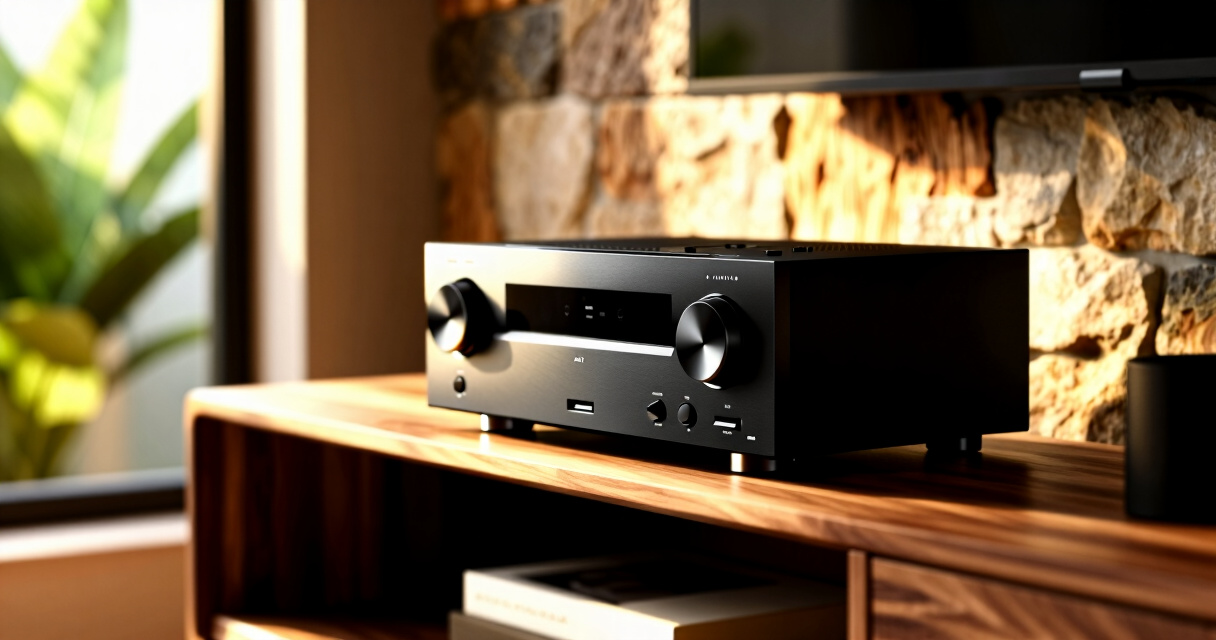

AV receivers are the heart of any home theater, responsible for distributing audio and video signals to deliver immersive sound and crisp picture quality. The best models balance power, versatility, and ease of use, but choosing the right one involves tradeoffs. The Sony STR-AN1000 stands out for its 8K support and feature set, making it a strong all-around choice. The Denon AVR-X1700H offers excellent value with robust sound and smart features, while premium options like the TX-NR7100 cater to audiophiles seeking top performance. Keep reading for a detailed breakdown of these models and what to consider before buying.
Key Takeaways
- The top picks balance power, feature set, and future-proofing, particularly with 8K HDMI support.
- Cost-effective options like the Denon AVR-S570BT deliver solid performance for smaller or casual setups.
- Premium models such as the TX-NR7100 prioritize high-end audio and advanced connectivity for audiophiles.
- Ease of use and setup remain key considerations, with many models offering built-in voice control and streaming.
- Compatibility with smart home systems and multi-room audio often influences the best choice for modern setups.


More Details on Our Top Picks
Sony STR-AN1000 7.2 Channel Surround Sound Home Theater A/V Receiver with 8K HDMI, Dolby Atmos, DTS:X, Bluetooth, WiFi, Chromecast, Spotify Connect, Apple AirPlay
The Sony STR-AN1000 stands out for its comprehensive feature set and user-friendly interface, making it ideal for those seeking a versatile home theater upgrade. Its support for 8K HDMI and Dolby Atmos offers future-proofing and immersive sound, comparable to the TX-NR7100 but at a more accessible price point. While it provides multiple streaming options, the interface can feel cluttered for beginners, and its 240W power consumption may concern energy-conscious users. Compared with higher-end models like the TX-NR7100, it trades some advanced room calibration features for ease of setup and affordability. This model is perfect for homeowners who want premium sound and connectivity without the complexity or cost of flagship units.
Pros:- Supports advanced audio formats like Dolby Atmos and DTS:X for immersive sound
- 8K HDMI support ensures compatibility with the latest video standards
- Multiple streaming options including Chromecast, AirPlay, and Spotify Connect
- Easy setup with graphical interface
Cons:- Power consumption of 240W may be high for some users
- Complex features can be overwhelming for beginners
- Requires a 120V power supply, limiting international use
Best for: Homeowners seeking a feature-rich, future-proof AV receiver that balances ease of use with high-end audio and video support
Not ideal for: International users in regions with 220V supply, as this model requires 120V power; tech novices who prefer simple, straightforward setups
- Channels:7.2
- Power:165 W per channel at 6 ohms, 1 kHz, 0.9% THD
- Power Requirement:120V 60Hz
- Power Consumption:240W
- HDMI Support:8K & 4K/120 with HDMI 2.1
- Supported Formats:Dolby Atmos, DTS:X, Dolby Vision, HDR10, Hybrid Log Gamma, IMAX Enhanced
Bottom line: This receiver suits tech-savvy users who want high-quality audio and future-ready video features with straightforward setup.
TX-NR7100 9.2-Channel THX Certified AV Receiver
The TX-NR7100 excels as a high-performance receiver tailored for serious home theater enthusiasts and gamers. Its 9 channels and THX certification guarantee precise, immersive audio, rivaling the Denon AVR-X1700H but with more expansive room correction via Dirac Live. The inclusion of 8K/4K HDMI transfer and gaming enhancements like VRR and ALLM make it a top choice for those prioritizing both cinematic and gaming experiences. However, the setup can be complex, especially with additional microphones needed for optimal room calibration, and its higher price might deter budget-conscious buyers. Compared to the Sony STR-AN1000, it offers superior room calibration and more channels but at a steeper cost and complexity. It’s best suited for avid gamers and home theater buffs who want professional-grade calibration and extensive connectivity.
Pros:- Advanced room correction with Dirac Live for precise calibration
- Supports 8K/4K HDMI transfer with gaming features like VRR and ALLM
- DTS:X and Dolby Atmos support for immersive surround sound
- Extensive connectivity including streaming services and Sonos compatibility
Cons:- Setup complexity may require technical expertise
- Higher price point may be prohibitive for some buyers
- Additional microphones needed for optimal calibration
Best for: Tech-savvy home theater enthusiasts and gamers needing high-end calibration and extensive HDMI support
Not ideal for: Casual users or those with limited technical knowledge who prefer plug-and-play solutions
- Channels:9.2
- HDMI Out:3
- HDMI Version:2.1
- Supports 8K/4K:Yes
- HDR Pass-through:Yes
- Room Correction:Dirac Live
Bottom line: This receiver is ideal for dedicated home theater and gaming setups where advanced calibration and connectivity are priorities.
Denon AVR-X1700H 7.2 Channel AV Receiver – 80W/Channel, 8K HDMI, Dolby Atmos, DTS:X, Built-in HEOS, Alexa Voice Control
The Denon AVR-X1700H stands out for its ability to deliver immersive 8K video support along with Dolby Atmos and DTS:X, making it ideal for those seeking premium home theater performance. Compared with the Denon AVR-S970H, it offers slightly more advanced video upscaling and multi-room capabilities, though at a higher price. This receiver excels in multi-dimensional audio and multi-room streaming, but its setup can be complex for newcomers and it demands a compatible smart home ecosystem for full automation. If you prioritize cutting-edge video and immersive sound in a sophisticated setup, this model fits well, but it may be overkill for casual users.
Pros:- Supports advanced 8K HDMI video and upscaling
- Immersive Dolby Atmos and DTS:X audio
- Multi-room streaming with built-in HEOS
- Voice control compatibility with Alexa and others
Cons:- Setup complexity can be daunting for beginners
- Premium price may be prohibitive for some
- Requires compatible smart home system for full features
Best for: Home theater enthusiasts who want top-tier audio and video quality with smart home integration
Not ideal for: Casual viewers or those new to AV receivers who prefer simple plug-and-play ease
- Channels:7.2
- Power per Channel:80W
- HDMI Inputs:3 (8K/60Hz, 4K/120Hz pass-through)
- Supports:8K HDMI, Dolby Atmos, DTS:X, HDR10, Dolby Vision
- Streaming Services:Spotify, Pandora, Amazon Music HD
- Voice Control:Alexa, Siri, Google Assistant
Bottom line: This receiver is ideal for serious home theater fans willing to invest in a feature-rich, immersive experience.
Denon AVR-S970H 8K Ultra HD 7.2 Channel AV Home Audio Receiver, Bluetooth, Alexa, HEOS, Black
The Denon AVR-S970H offers a robust 90W per channel and supports 8K/60Hz pass-through, making it a versatile choice for gaming, movies, and multi-room music. When compared to the Denon AVR-X1700H, it provides more HDMI inputs and higher power output, which benefits larger setups or more connected devices. Its support for Dolby Atmos enhances surround sound immersion, but its larger size and somewhat complex setup may challenge less experienced users. This model makes sense for those who want a flexible, high-power receiver with multiple HDMI ports and multi-room streaming, though it may be more than needed for small spaces or casual listeners.
Pros:- Supports 8K video and Dolby Atmos for immersive entertainment
- Six HDMI inputs suitable for multiple devices
- Built-in HEOS for multi-room streaming
- Higher power output for larger rooms
Cons:- Setup can be complicated for beginners
- Large footprint requires ample space
- Higher price point may not fit tight budgets
Best for: Homeowners seeking a multi-purpose receiver with high power and numerous inputs for gaming, movies, and multi-room audio
Not ideal for: Casual users who prefer simpler, more compact setups without extensive configuration
- Power Output:90W per channel
- Channels:7.2
- Video Support:8K/60Hz pass-through
- HDMI Ports:6 In / 2 Out
- Wireless:Wi-Fi, Bluetooth
- Supported Services:Pandora, Spotify, TIDAL
Bottom line: This receiver is best suited for those needing high power and multiple inputs in a flexible, multi-room setup.
Denon AVR-S570BT AV Receiver 5.2 Channel 8K Ultra HD, Bluetooth Streaming, 4 HDMI 2.1 Inputs
The Denon AVR-S570BT provides essential 8K support with 4 HDMI 2.1 inputs, making it a solid choice for smaller rooms or users with a limited budget. Unlike the larger, more powerful Denon AVR-S970H, it offers fewer channels and less power (70W per channel), which might fall short in very large spaces. Its straightforward setup and on-screen guide appeal to beginners, but the limited power could compromise sound quality in bigger rooms. This model suits those who want decent 8K video support and modern features without overpaying or needing extensive power, though it may not satisfy audiophiles with demanding speaker setups.
Pros:- Supports 8K Ultra HD and HDR formats
- Multiple HDMI 2.1 inputs for modern devices
- Easy setup with on-screen guidance
- Affordable price for essential features
Cons:- Limited to 70W per channel, may underperform in large rooms
- No built-in Wi-Fi, relies on Bluetooth for streaming
- Less future-proof for very high-end setups
Best for: Small-room owners or first-time AV receiver buyers looking for a straightforward, affordable upgrade
Not ideal for: Large or high-demand setups where more power and channels are necessary for room-filling sound
- Channels:5.2
- HDMI Inputs:4
- 8K Support:Yes
- Power:70W x 5
- Standby Power:0.1 W
- eARC:Yes
Bottom line: This receiver makes the most sense for small spaces or casual users seeking 8K support without complexity or high cost.
Yamaha RX-V385 5.1-Channel 4K Ultra HD AV Receiver with Bluetooth (Renewed)
The Yamaha RX-V385 stands out for offering solid 4K Ultra HD support and Bluetooth streaming at an attractive price point. Compared with higher-end models like the Denon AVR-X1800H, it lacks 8K compatibility and advanced surround formats, but it covers the essentials for a budget-friendly setup. Its simple interface and reliable wireless options make it suitable for those just starting with home theater, though being a renewed product means potential warranty limitations. The model provides powerful 5.1 surround sound, making it a good entry point without complex features that can overwhelm beginners.
Pros:- Supports high-quality 4K Ultra HD and HDR content
- Wireless Bluetooth connectivity for easy streaming
- Powerful 5.1 surround sound
Cons:- Renewed product may have limited warranty coverage
- Limited detailed specifications and advanced features
Best for: Budget-conscious consumers who want straightforward home theater performance without the complexity of high-end features.
Not ideal for: Enthusiasts seeking 8K support or Dolby Atmos for immersive audio, since this model is limited to 4K and basic surround sound.
- Channels:5.1
- Resolution Support:4K Ultra HD
- HDR Support:HDR10, Dolby Vision
- HDMI:HDMI 2.1 with HDCP 2.2 (4-in/1-out)
- Connectivity:Bluetooth
- Power Output:N/A
Bottom line: This receiver makes the most sense for entry-level buyers prioritizing value and simplicity over the latest video formats.
Denon AVR-X1800H 7.2 Channel AV Stereo Receiver with 8K HDMI, Wireless Streaming, Dolby Vision
The Denon AVR-X1800H is tailored for those who want a versatile home theater with future-proof features. Its support for 8K/60Hz video and Dolby Atmos sets it apart from the Yamaha RX-V385, offering richer audio and sharper visuals for demanding users. The multiple HDMI inputs with 8K bandwidth mean lag-free gaming and seamless video switching, making it ideal for high-performance setups. However, its 80W per channel power may fall short for very large rooms or those requiring more volume. The setup complexity can be daunting for beginners, but for experienced users, it delivers a richly immersive experience with broad compatibility.
Pros:- Supports 8K/60Hz and 4K/120Hz pass-through for future-proof visuals
- Supports Dolby Atmos, DTS:X, and DTS Virtual:X for immersive sound
- Multiple HDMI inputs with high bandwidth for lag-free gaming
Cons:- Complex setup may challenge beginners
- Limited to 80W per channel, potentially insufficient for very large rooms
Best for: Home theater enthusiasts and gamers who want 8K support and immersive 3D audio in a flexible, feature-rich receiver.
Not ideal for: Casual listeners or those with small rooms who don’t need 8K video or multiple HDMI inputs, as the extra features may be unnecessary and overwhelming.
- Channels:7.2
- Power:80W per channel
- HDMI Inputs:3 dedicated 8K
- Video Support:8K/60Hz, 4K/120Hz
- Audio Formats:Dolby Atmos, DTS:X
- Wireless Streaming:HEOS, WiFi, Bluetooth
Bottom line: This receiver is best suited for users who prioritize cutting-edge video and audio formats and are comfortable with a more involved setup process.
Sony STRDH190 2-Ch Home Stereo Receiver with Bluetooth and Phono Inputs
The Sony STRDH190 excels at delivering powerful stereo sound in a compact form, making it ideal for music lovers who want straightforward playback. Its 100W per channel output ensures lively sound, and built-in Bluetooth makes wireless streaming effortless. Unlike the other two options, it doesn’t support surround sound or video, focusing instead on high-quality stereo audio. The inclusion of a phono input appeals to vinyl enthusiasts, while its simple interface favors ease of use. However, without Wi-Fi or multi-channel support, it falls short for users seeking a comprehensive home theater system or multi-room setup.
Pros:- Wireless Bluetooth streaming for easy music playback
- Supports high-resolution audio for superior sound quality
- Includes phono input for vinyl playback
Cons:- Limited to 2 channels, not suitable for surround sound
- No Wi-Fi connectivity or advanced multi-room features
Best for: Music lovers and vinyl collectors needing a compact, powerful stereo receiver for single-room audio.
Not ideal for: Home theater fans seeking surround sound or multi-channel configurations, as this model is limited to 2 channels.
- Power Output:100 watts x 2 (8 ohms, 1 kHz)
- Inputs:Phono, 4 stereo RCA, 3.5mm
- Features:Bluetooth, FM radio with 30 presets
- Dimensions:5 ¼ inches tall
- Speaker Impedance:6–16 ohms
- Supported Audio:High-res audio
Bottom line: This receiver is perfect for those who prioritize high-quality stereo sound in a simple, space-efficient package without extra features.
How We Picked
Our evaluation focused on a combination of performance, usability, build quality, and value. We prioritized models with recent HDMI updates, support for Dolby Atmos and DTS:X, and smart features like voice control and streaming services. Reliability and brand reputation also played a role, along with price-to-performance ratios. The ranking reflects how well each receiver balances these factors, helping buyers find options suited for different budgets and needs. We aimed to highlight offerings that excel in core home theater functions while avoiding overly complex or limited models.Factors to Consider When Choosing AV Receivers
Choosing the right AV receiver involves considering several key factors beyond just specifications. Understanding your specific needs, future-proofing, and budget can help narrow the options. A well-chosen receiver enhances your entire home theater experience, but common pitfalls include overpaying for features you won’t use or selecting a model that’s incompatible with your existing setup. The following factors will guide you through what matters most when selecting an AV receiver.Power and Channel Count
Power output and the number of channels determine how loud and immersive your sound can be. If you plan to run a large, multi-speaker setup, opt for a receiver with at least 7 channels and sufficient wattage. For smaller rooms or simpler setups, a 5.2 or 7.2 configuration may suffice. However, more channels generally mean higher cost and complexity, so match your choice to your room size and future expansion plans.
Video Compatibility and HDMI Support
Modern AV receivers should support at least 8K HDMI and HDMI 2.1 for future-proofing, especially if you plan to upgrade your display or gaming consoles. Look for features like HDCP 2.3, VRR, and eARC to ensure seamless compatibility with new devices. Overlooking these specifications can lead to issues with video quality or lag, making it worth investing in a model that supports current and upcoming standards.
Smart Features and Connectivity
Built-in Wi-Fi, Bluetooth, and streaming services like Spotify, Apple AirPlay, or Chromecast expand your entertainment options. Voice control compatibility with Alexa, Google Assistant, or Siri can simplify operation. Be cautious of models that lack these features or require complicated setups—ease of use can significantly enhance your experience and reduce frustration over time.
Sound Quality and Support for Advanced Audio Formats
High-quality sound depends on support for Dolby Atmos, DTS:X, and other immersive formats. Consider models with sufficient amplification for your speakers, especially if you aim for premium sound. Cheaper receivers might omit these features or have lower power, which can limit performance and immersion, especially in large rooms or with high-end speakers.
Ease of Setup and User Interface
An intuitive setup process and user-friendly interface save time and reduce frustration. Many modern receivers include automatic calibration tools and mobile apps for easier configuration. Avoid overly complicated menus or limited app support if you prefer a straightforward experience. A good interface can make daily use more enjoyable and help you get the most out of your system.
Frequently Asked Questions
Do I need an 8K AV receiver if I don’t have an 8K TV?
While you don’t need an 8K receiver strictly for your current setup, choosing one with 8K support offers some future-proofing. It ensures compatibility with new gaming consoles, streaming devices, and TVs that may adopt 8K technology later. This can extend the lifespan of your investment, but if your current equipment limits you to 4K, a receiver with HDMI 2.0 might be sufficient and more cost-effective for now.
Is it better to buy a more powerful receiver than I need?
In general, opting for a receiver with slightly more power than your current needs provides headroom for future upgrades and larger rooms. However, excessive power does not necessarily mean better sound quality; it’s more important to match the receiver’s power to your speakers and room size. Overpowering can lead to distortion or damage, so aim for a balance that ensures clear, distortion-free audio at your typical listening levels.
Should I prioritize smart features over audio quality?
Both are important, but the priority depends on your use case. If you value seamless streaming, voice control, and multi-room capabilities, smart features will enhance your daily experience. However, for audiophiles or those seeking the best sound performance, focusing on models with high-quality audio support like Dolby Atmos and robust amplification may take precedence. Ideally, choose a receiver that offers both if your budget allows.
Can I upgrade my existing speakers with a new AV receiver?
Yes, most modern AV receivers are designed to be compatible with a wide range of speakers, provided the impedance and power handling match. Before upgrading, verify that your speakers can handle the receiver’s output and that you have the appropriate number of channels. Upgrading your receiver can improve overall sound clarity and add new features, but ensure your speakers are compatible to avoid performance issues.
Is it worth paying more for a premium AV receiver?
Premium models often include advanced features, higher power output, and better build quality, which can justify the higher cost if you seek top-tier performance. They typically offer more refined sound, better room calibration, and future-proofing with the latest HDMI standards. However, for casual or smaller setups, a mid-range model might provide all necessary features at a more accessible price point, making the extra investment less critical.
Conclusion
For most users seeking a balanced experience, the Sony STR-AN1000 offers excellent value with robust features and future-proofing. If you prioritize budget-friendly options without sacrificing core functionality, the Denon AVR-S570BT is a sensible pick. Audiophiles or home theater enthusiasts will find the TX-NR7100 suits their high-end needs, especially with advanced audio formats and connectivity. Beginners should consider models with intuitive interfaces and setup tools, while those with larger or more complex setups may want to invest in premium, multi-channel receivers. Clarifying your priorities ensures you select the AV receiver that best supports your entertainment goals in 2026.