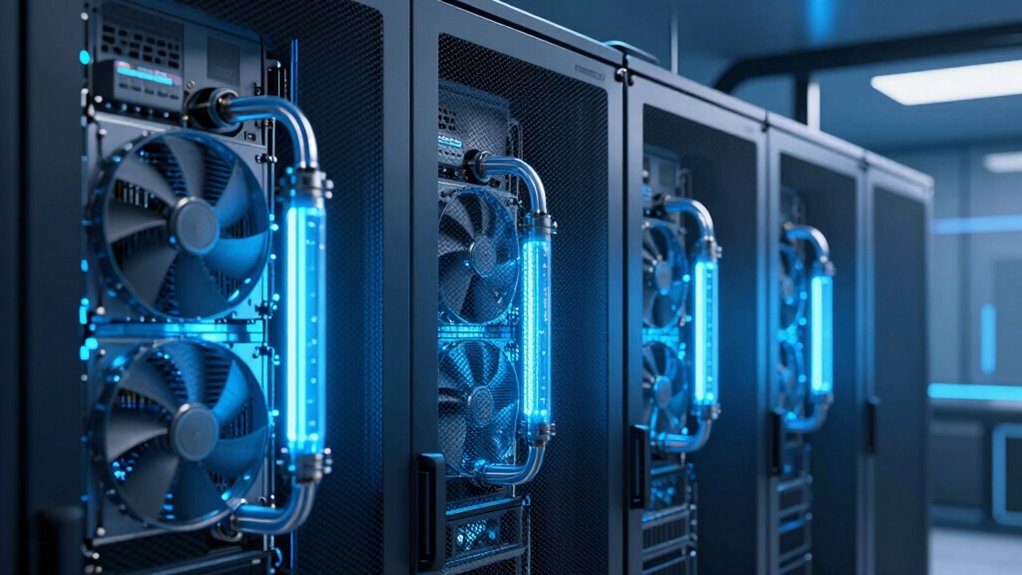
Advances in cooling technology now make systems smarter and more adaptive, using sensors and controls to optimize performance based on real-time conditions. Eco-friendly refrigerants and improved heat exchange methods help reduce energy use and environmental impact. Better building designs and insulation decrease heat gain, easing the cooling load. These innovations lower energy bills, cut emissions, and promote sustainability. If you want to explore how these improvements are shaping the future, keep exploring further options available to you.
Key Takeaways
- Smart sensors and controls enable adaptive cooling, reducing energy use by optimizing system operation based on real-time conditions.
- Eco-friendly refrigerants and advanced heat exchange technologies lower environmental impact and improve energy efficiency.
- Improved building design and insulation decrease heat gain, lessening the cooling system’s energy demand.
- Integration of sustainable practices and greener refrigerants minimizes carbon footprint and promotes eco-friendly cooling solutions.
- Ongoing innovations focus on balancing comfort, cost savings, and environmental responsibility for more efficient cooling systems.
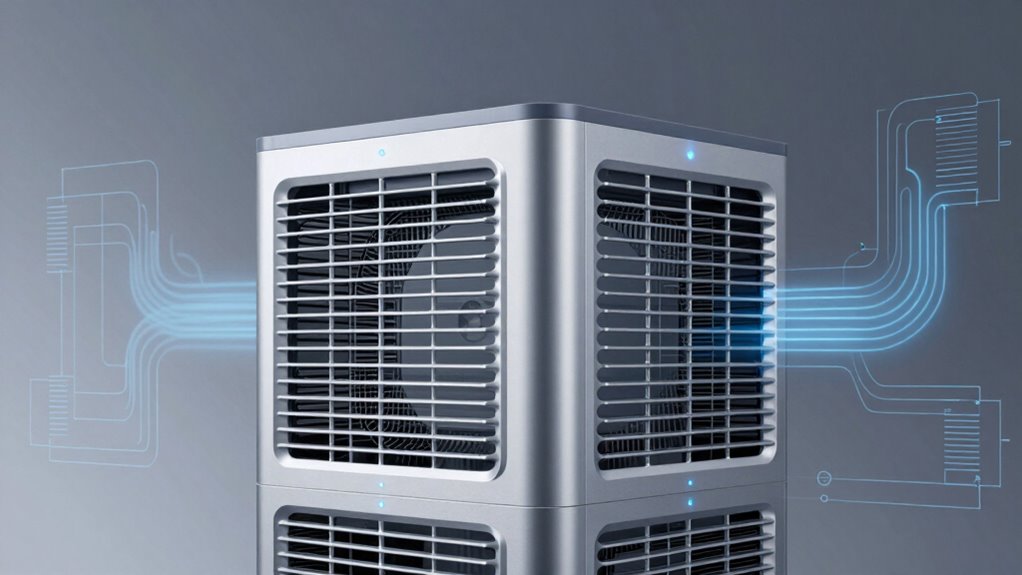
Advancements in cooling technology are transforming the way we stay comfortable and reduce energy consumption. Today’s innovations focus on making cooling systems more efficient, which means you can enjoy a cooler environment without the high energy bills or negative environmental effects. As you seek ways to stay comfortable during hot weather, you’ll notice how modern cooling solutions are designed to optimize energy savings while minimizing their environmental impact. These improvements are not just about comfort—they’re about creating sustainable solutions that help protect the planet and your wallet.
One of the key ways these new technologies improve efficiency is through smarter, more adaptive systems. Traditional air conditioners often run at full blast, regardless of the actual cooling needs, wasting energy. Modern systems incorporate sensors and smart controls that monitor temperature, humidity, and occupancy levels, adjusting their operation accordingly. This means you don’t waste energy cooling an empty room or overcooling your space, leading to significant energy savings. By using less power, these systems help reduce your overall energy bill while also decreasing the carbon footprint associated with cooling. Incorporating adaptive cooling systems that respond to real-time conditions further enhances energy efficiency.
Smart, adaptive cooling systems save energy by adjusting to your needs and reducing waste.
Another major development is the use of environmentally friendly refrigerants and innovative heat exchange methods. Older refrigerants, like chlorofluorocarbons (CFCs), damage the ozone layer and contribute to global warming. Newer refrigerants are designed to have a much lower environmental impact, helping to preserve the ozone layer and reduce greenhouse gas emissions. Additionally, advanced heat exchange technologies improve the efficiency of cooling cycles, extracting more heat with less energy. These improvements not only lower your energy consumption but also lessen the environmental impact of your cooling system, making it a more sustainable choice. Incorporating eco-friendly refrigerants and innovative heat exchange processes further enhances the sustainability of modern systems.
Energy-efficient cooling is also being achieved through better insulation and design. Modern buildings are constructed or retrofitted with materials that reduce heat gain, meaning your cooling system doesn’t have to work as hard to maintain a comfortable temperature. Innovations like reflective roofing and window coatings further decrease heat absorption, reducing the load on your cooling system and saving energy. These passive solutions complement active cooling technologies, creating a more holistic approach to efficient cooling. Proper insulation and building design are essential components of a comprehensive energy-saving strategy, as they help maintain cooler indoor temperatures more effectively. Improving building *envelope* performance is a crucial step toward maximizing overall cooling efficiency.
In essence, these advancements are helping you stay cool while being mindful of your environmental footprint. With smarter controls, eco-friendly refrigerants, and better building design, you’re contributing to energy savings and reducing your overall environmental impact. This isn’t just about comfort; it’s about making smarter choices that benefit both your immediate surroundings and the planet. As cooling technology continues to evolve, you can expect even more efficient, sustainable, and cost-effective solutions that keep you comfortable in a warming world. Enhancing sustainability with innovative cooling solutions is essential for a greener future.
smart energy-efficient air conditioner
As an affiliate, we earn on qualifying purchases.
As an affiliate, we earn on qualifying purchases.
Frequently Asked Questions
What Are the Environmental Impacts of New Cooling Technologies?
New cooling technologies boost environmental sustainability by reducing energy consumption, which lowers greenhouse gas emissions and minimizes your ecological footprint. These innovations often use eco-friendly refrigerants and energy-efficient designs, cutting down harmful environmental impacts. By adopting these advanced systems, you help protect ecosystems, conserve resources, and support a healthier planet. Your choices in cooling technology directly contribute to a more sustainable future, balancing comfort with ecological responsibility.
How Cost-Effective Is Implementing Advanced Cooling Systems?
You’ll find implementing advanced cooling systems quite cost-effective, as they can reduce energy bills by up to 30%. This translates into significant cost savings over time. Although initial installation may seem expensive, lower maintenance costs and increased efficiency make these systems a smart investment. Plus, the long-term savings outweigh upfront expenses, making advanced cooling technology not only environmentally friendly but also financially beneficial for your budget.
Can These Cooling Innovations Be Integrated Into Existing Infrastructure?
Yes, these cooling innovations can be integrated into existing infrastructure, but you might face retrofit challenges and infrastructure compatibility issues. Upgrading systems requires careful planning to guarantee new technology fits with current setups without causing disruptions. You’ll need to assess your infrastructure’s capacity and possibly modify certain components, but the long-term benefits of improved efficiency and energy savings make it a worthwhile investment.
What Are the Future Trends in Cooling Technology Development?
Future trends in cooling technology focus on smart materials and IoT integration. You’ll see smarter systems that adapt dynamically, optimizing efficiency while reducing energy use. Innovations like responsive smart materials will change how cooling responds to environmental changes, while IoT connectivity allows remote monitoring and control. These advancements promise more sustainable, seamless cooling solutions that enhance comfort and cut costs, paving the way for smarter, more efficient infrastructure worldwide.
How Do Cooling Improvements Affect Energy Consumption Worldwide?
Cooling improvements substantially reduce energy consumption worldwide by tackling urban heat and boosting thermodynamic efficiency. When modern cooling tech is more efficient, it needs less power, which cuts greenhouse gas emissions and eases strain on power grids. You benefit from lower energy bills and contribute to reducing urban heat islands. As cooling becomes smarter and more sustainable, you’re helping create cooler, more livable cities while conserving precious energy resources globally.
eco-friendly refrigerant cooling system
As an affiliate, we earn on qualifying purchases.
As an affiliate, we earn on qualifying purchases.
Conclusion
As cooling tech continues to evolve, you can’t help but wonder: what’s next? Every new innovation promises faster, greener, more reliable cooling solutions, but the real breakthrough might be just around the corner. Will it reshape how you experience comfort or revolutionize industries? Stay tuned—because the future of cooling technology is unfolding right before your eyes, and it’s poised to change everything you thought you knew about staying cool. The best is yet to come.
As an affiliate, we earn on qualifying purchases.
insulated reflective roofing materials
As an affiliate, we earn on qualifying purchases.
As an affiliate, we earn on qualifying purchases.