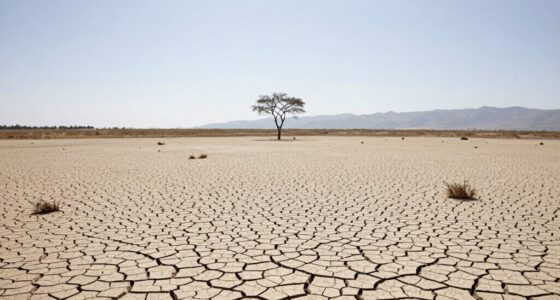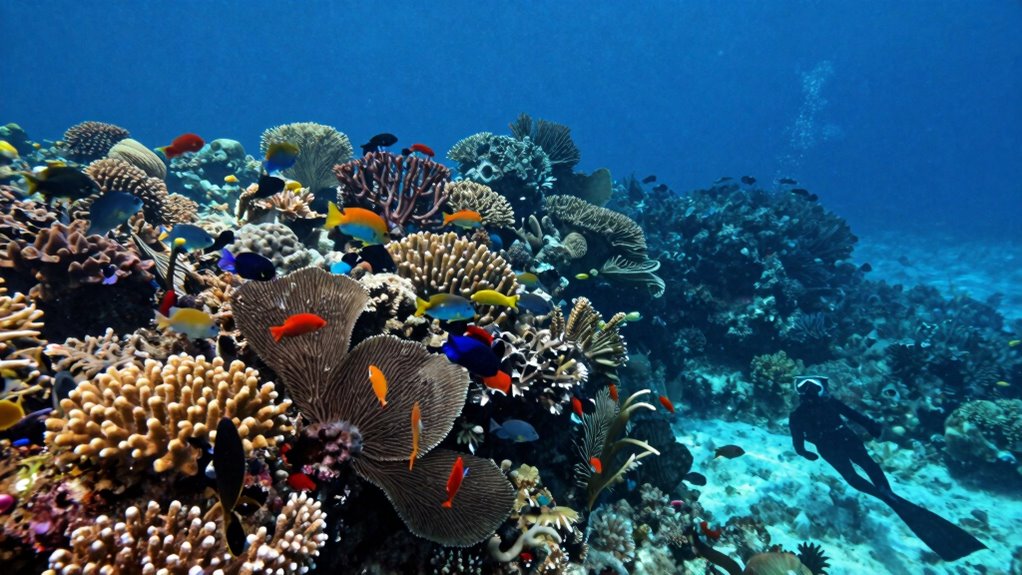

Marine parks are essential but can’t fully protect the ocean on their own, as threats like pollution, habitat destruction, and unsustainable development continue outside their borders. To truly safeguard marine ecosystems, you need broader strategies that regulate aquaculture practices, control coastal expansion, and reduce pollution. Without these, the benefits inside protected areas are limited. If you’re curious about how to strengthen ocean conservation efforts beyond marine parks, there’s more to explore.
Key Takeaways
- Marine parks alone cannot address underlying threats like pollution, habitat destruction, and overfishing outside protected areas.
- Aquaculture and coastal development significantly impact ocean health, requiring regulation beyond marine park boundaries.
- Effective ocean protection demands integrated management strategies, including sustainable practices and habitat preservation.
- Protecting marine ecosystems requires reducing harmful activities that occur outside park zones to ensure broader environmental benefits.
- A holistic approach combining marine parks with policies on pollution, development, and sustainable resource use is essential for true conservation.
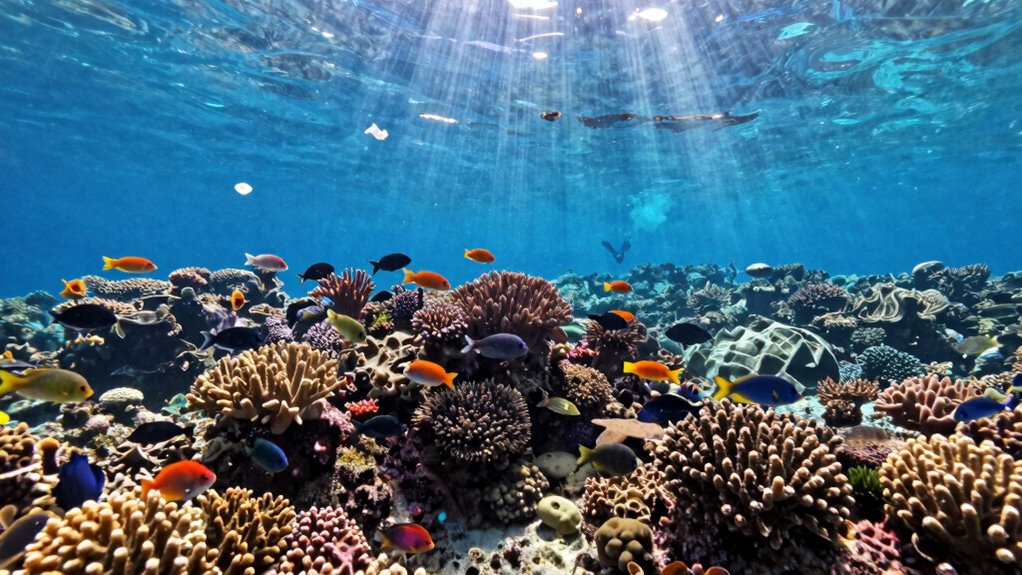
While marine parks are essential for protecting ocean ecosystems, they alone aren’t enough to address the complex threats facing our oceans today. These protected areas help preserve biodiversity and give marine life a safe haven, but they don’t tackle the root causes of ocean degradation. You need to recognize that activities like aquaculture impacts and coastal development pose significant challenges that extend beyond the boundaries of marine parks.
Marine parks alone can’t solve ocean threats; addressing aquaculture and coastal development is essential for true ocean health.
Aquaculture, or fish farming, has grown rapidly to meet the global demand for seafood, but it often comes with serious environmental costs. You might see sustainable options, but many aquaculture operations lead to water pollution, habitat destruction, and the spread of diseases. Waste from fish farms can contaminate surrounding waters, harming wild populations and disrupting delicate ecosystems. This pollution doesn’t respect park borders; it spreads, affecting areas outside protected zones and undermining efforts to restore ocean health.
Coastal development is another major threat that’s often overlooked when focusing solely on marine parks. As populations grow, coastal regions face intensified construction, port expansion, and tourism infrastructure projects. These developments can lead to habitat loss, increased sedimentation, and pollution runoff that degrade coral reefs, mangroves, and seagrass beds. You might think that establishing marine parks protects these ecosystems, but if the surrounding coast is heavily developed, the benefits are limited. The direct impacts of development compromise the resilience of marine environments, making it harder for protected areas to sustain biodiversity. Effective management strategies should include integrated planning to mitigate these impacts and promote sustainable growth.
Addressing these issues requires a broader approach that integrates policies beyond marine parks. You need stronger regulations on aquaculture practices, promoting sustainable farming methods that minimize environmental impacts. Similarly, controlling coastal development through zoning laws and environmental assessments can limit habitat destruction and pollution. It’s also important to consider the long-term sustainability of ocean resources to ensure effective conservation efforts.
In essence, ocean protection demands a comprehensive strategy. While marine parks are vital, they’re just one piece of the puzzle. To truly safeguard our oceans, you must work to reduce aquaculture impacts and regulate coastal development. Only then can we ensure that marine life thrives both inside and outside protected zones, securing the health of our oceans for future generations.

SUSTAINABLE CATFISH FARMING HANDBOOK: An Expert Advice for Mastering Catfish Raising: Its Breeding Techniques, Health Tips, Essential Equipment, Feeding, Pond Design, & Care Strategies for Aquaculture
As an affiliate, we earn on qualifying purchases.
As an affiliate, we earn on qualifying purchases.
Frequently Asked Questions
How Do Marine Parks Impact Local Fishing Communities?
Marine parks can impact your community livelihoods by imposing fishing restrictions, which may limit your catch and income. While they aim to protect ecosystems, these restrictions can challenge local fishing communities’ ability to sustain themselves. You might need to adapt by exploring alternative methods or diversifying your activities. Balancing conservation efforts with the needs of fishing communities is essential to guarantee both environmental health and community well-being.
What Are the Main Threats to Ocean Health Besides Protected Areas?
Ever wonder what else threatens ocean health besides marine parks? Coral bleaching and overfishing are major culprits, disrupting ecosystems and depleting fish stocks. Climate change accelerates bleaching, weakening corals and losing biodiversity. Overfishing removes key species, destabilizing food chains. These threats persist despite protected areas, highlighting the need for all-encompassing solutions. You can help by supporting sustainable practices and policies that address these critical issues directly.
Can Marine Parks Effectively Address Climate Change Effects?
Marine parks alone can’t fully address climate change effects, but they play a crucial role in building climate resilience. By protecting ecosystems, you help preserve biodiversity and promote natural processes like carbon sequestration. Focus on ecosystem restoration alongside marine parks to strengthen resilience further. These efforts work together to buffer coastal communities from storms, support fish populations, and enhance overall ocean health, making climate impacts more manageable.
How Is Ocean Pollution Managed Outside of Marine Parks?
You might think pollution management outside marine parks is limited, but in reality, it involves extensive strategies like pollution reduction and waste management. Authorities enforce regulations on waste disposal, promote recycling, and develop clean-up initiatives to prevent pollutants from reaching oceans. Community-led efforts also play a crucial role. These measures collectively reduce ocean pollution, helping ecosystems recover and supporting global efforts to protect marine environments beyond designated parks.
What Role Do International Agreements Play in Ocean Protection?
International agreements play a vital role in ocean protection by fostering international cooperation and establishing legal frameworks that guide countries’ efforts. They set shared goals, regulate activities like fishing and pollution, and hold nations accountable for environmental harm. By participating in these agreements, you help guarantee collective responsibility and effective action, which are essential for safeguarding ocean ecosystems beyond local or national efforts.

Reusable Floating Oil Boom for Water Pollution Control, Marine Spill Prevention, Debris Barrier for Ports & Rivers, Independent Airbags, 10m x 45cm (33ft x 17.88
- Effective Oil Containment: Blocks and diverts floating oil efficiently
- Multi-Use Water Protection: Intercepts debris and algae for water safety
- Durable PVC Construction: Resistant to oil, UV, and weather elements
As an affiliate, we earn on qualifying purchases.
As an affiliate, we earn on qualifying purchases.
Conclusion
If you think marine parks alone can save our oceans, think again. They’re just tiny islands in a sea of chaos, barely scratching the surface of the damage beyond their borders. To truly protect our oceans, you’ll need to champion massive, bold actions—like global policies, innovative technology, and everyday choices that challenge the status quo. Otherwise, your ocean’s future could vanish faster than you can say “marine protected area.” It’s time to think bigger!

Science-Based Restoration Monitoring of Coastal Habitats, Volume Two: Tools for Monitoring Coastal Habitats
As an affiliate, we earn on qualifying purchases.
As an affiliate, we earn on qualifying purchases.

Warning Property Protected By A U.S. Marine 12 inch by 8 inch Metal Tin Sign
- Material: Tin and metal construction
- Size: 8×12 inches with holes
- Durability: Waterproof, anti-glare, fade-resistant
As an affiliate, we earn on qualifying purchases.
As an affiliate, we earn on qualifying purchases.