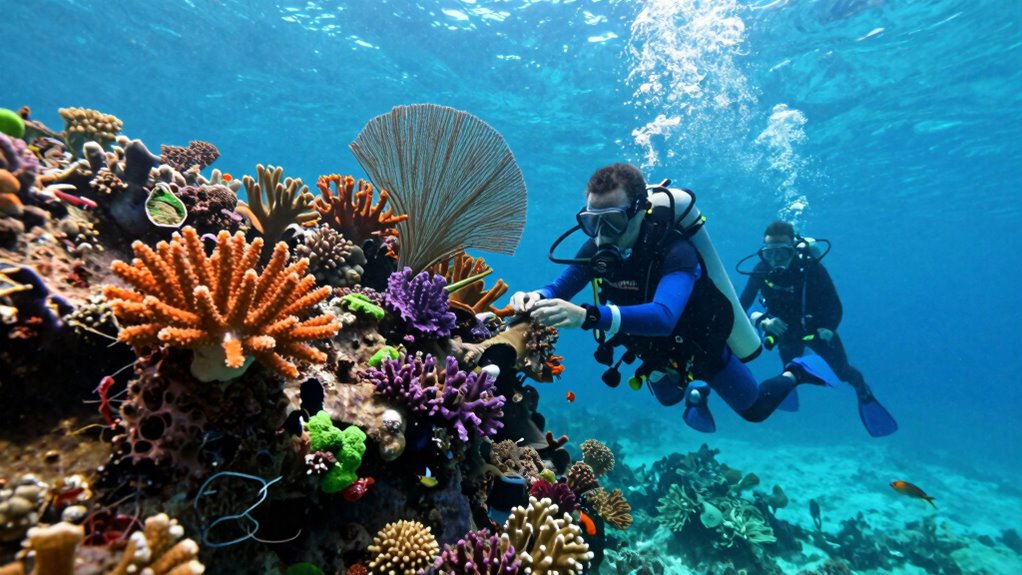

Coral restoration projects are evolving beyond simple fragment transplantation to focus on boosting genetic diversity and climate resilience. You’ll see innovations like underwater nurseries that improve survival rates and genetic analysis to select heat-tolerant corals. Efforts now include enhancing water quality and protecting surrounding habitats for long-term success. These adaptive, ecosystem-based strategies aim to create self-sustaining reefs capable of withstanding environmental stresses. Keep exploring how these efforts are building resilient, thriving marine ecosystems.
Key Takeaways
- Shift from fragment transplantation to promoting genetic diversity and selecting resilient coral strains.
- Utilization of underwater nurseries and genetic analysis for faster, more effective reef recovery.
- Integration of water quality improvements and habitat protection into restoration strategies.
- Focus on enhancing climate resilience through adaptive, genetically diverse coral populations.
- Emphasis on long-term ecological monitoring and ecosystem-based management for sustainability.
Have you ever wondered how scientists and conservationists are working to save our fragile coral reefs? The effort to restore these vibrant ecosystems has become more innovative and strategic over time, especially as threats like climate change and pollution intensify. Today’s coral restoration projects focus not only on rebuilding damaged reefs but also on enhancing marine biodiversity and increasing climate resilience. This shift reflects a deeper understanding that healthy, diverse reefs are better equipped to withstand environmental stresses.
Innovative coral restoration enhances biodiversity and resilience to combat climate change and pollution threats.
In the past, restoration efforts often centered around transplanting coral fragments to damaged areas, hoping they would grow and thrive. While this approach helped, it didn’t fully address the complex challenges reefs face. Now, scientists are adopting methods that promote genetic diversity among corals, ensuring that the new growth can adapt more effectively to changing conditions. By selecting resilient coral strains, projects aim to foster reefs better prepared for rising sea temperatures and acidification, key factors contributing to coral bleaching and die-offs. This focus on resilience makes restoration efforts more sustainable in the long run.
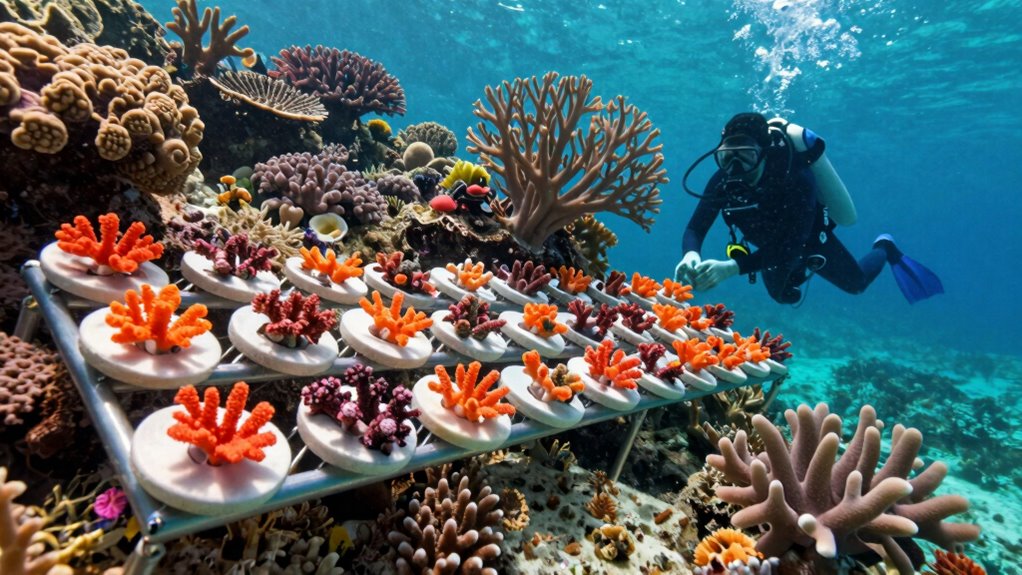
Advances in technology are also transforming how we restore reefs. Researchers employ underwater nurseries where corals are grown in controlled environments before being transplanted to their natural habitats. This method boosts survival rates and accelerates reef recovery. Additionally, genetic analysis tools allow scientists to identify and propagate corals with desirable traits, such as heat tolerance, which can then be introduced to vulnerable reefs. These innovations increase the chances of creating self-sustaining, resilient ecosystems that support diverse marine life.
Furthermore, holistic approaches have gained traction. Restoration projects now incorporate measures to improve water quality, reduce sedimentation, and protect surrounding habitats. These efforts help to create a healthier environment for corals to grow and flourish. An understanding of the importance of genetic diversity is also guiding restoration strategies, ensuring that reef populations can adapt over time. This emphasis on adaptive management allows projects to respond dynamically to environmental changes and new scientific insights. Incorporating climate-resilient traits into restoration efforts is proving essential to help reefs withstand future environmental changes. Moreover, a focus on ecosystem-based management ensures that efforts are integrated and sustainable, considering all factors affecting reef health. By fostering a diverse array of marine species, these projects contribute to overall marine biodiversity, which is essential for ecosystem stability. When reefs are rich in species, they can better recover from disturbances, and their ecological functions are preserved. Recognizing the importance of long-term ecological monitoring helps ensure that restoration efforts remain effective and adaptable over time.
As an affiliate, we earn on qualifying purchases.
Frequently Asked Questions
How Do Coral Restoration Projects Impact Local Fisheries?
Coral restoration projects positively impact your local fisheries by boosting marine biodiversity, which supports healthier fish populations. As corals recover, they create essential habitats for many marine species, making fishing more sustainable and productive. You’ll notice improved fish catches and a more resilient ecosystem. Restoring corals helps secure fishing livelihoods, ensuring that local communities can continue their traditions and meet their food needs while maintaining ecological balance.
What Are the Biggest Challenges Faced During Coral Transplantation?
Imagine you’re in a Victorian lab, trying to save fragile coral. The biggest challenge in coral transplantation is ensuring genetic diversity and disease resistance. You face issues like coral stress from transplantation, which weakens their resilience. Additionally, capturing enough genetic variation is tough, so transplanted corals can struggle against diseases and environmental changes. Overcoming these hurdles requires careful selection, patience, and innovative techniques to promote healthy, resilient reefs.
How Is Technology Improving Coral Restoration Efforts?
Technology is considerably improving coral restoration efforts through innovative methods like genetic engineering and artificial reefs. You can now use genetic engineering to develop resilient coral strains that withstand climate change’s impacts. Additionally, artificial reefs serve as stable structures where corals can grow and thrive, accelerating recovery. These advancements make restoration more effective and sustainable, helping you restore damaged reefs more efficiently and with better long-term success.
Can Coral Restoration Help Combat Climate Change Effects?
Coral restoration can help combat climate change effects by boosting coral resilience, helping reefs withstand rising temperatures and acidification. By restoring and protecting healthier corals, you support ecosystems that absorb carbon dioxide, fight ocean acidification, and promote biodiversity. This proactive approach helps reefs adapt to a changing climate, ensuring they continue to serve as essential barriers and habitats. Ultimately, restoration efforts empower you to play a part in safeguarding our oceans for future generations.
What Is the Lifespan of Restored Coral Reefs?
Restored coral reefs can last for decades, with coral longevity largely depending on reef durability and ongoing environmental conditions. If you support healthy practices and reduce threats like pollution and climate change, these reefs can thrive longer. Active restoration efforts, combined with protective measures, improve the chances of prolonged reef durability, ensuring your efforts sustain vibrant marine ecosystems for future generations. Proper maintenance and resilience-building are key to maximizing coral longevity.
As an affiliate, we earn on qualifying purchases.
Conclusion
As you witness these coral restoration efforts, imagine a vibrant underwater tapestry slowly regrowing, each tiny coral fragment like a brushstroke of hope. Your support helps paint a brighter future beneath the waves, where coral reefs once thought lost are reborn like phoenixes rising from ashes. Together, you’re helping turn the tide, transforming barren seabeds into bustling underwater cities teeming with life. The ocean’s symphony of colors and creatures is waiting to sing again—thanks to your caring hands.
As an affiliate, we earn on qualifying purchases.
water quality testing kit for reefs
As an affiliate, we earn on qualifying purchases.
As an affiliate, we earn on qualifying purchases.