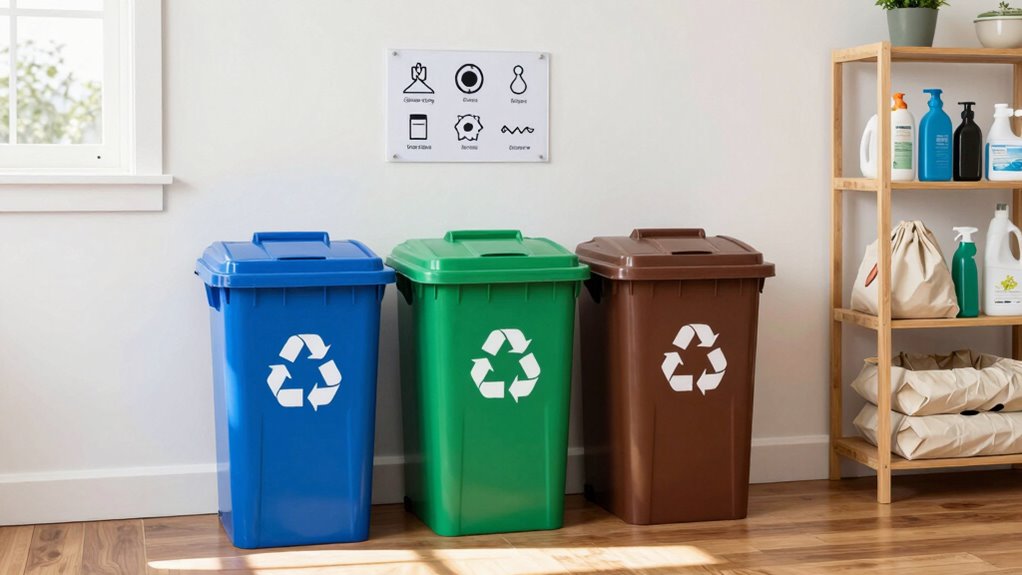
To set up a practical home recycling zone, choose a convenient, well-ventilated spot near your kitchen or laundry area. Use clearly labeled bins for plastics, paper, metals, and glass, adding labels for easy sorting. Incorporate composting options like tumblers or worm bins, making sure they’re simple to access and maintain. Keep the area tidy and organized, stay informed about local guidelines, and adjust as needed. Discover more tips to make your recycling efforts effortless and effective.
Key Takeaways
- Choose a convenient, well-ventilated spot near the kitchen or laundry area for easy access.
- Use clearly labeled bins for plastics, paper, metals, and glass to promote proper sorting.
- Incorporate composting options like bins or worm composters to handle organic waste efficiently.
- Establish regular routines for emptying and maintaining the recycling station to prevent odors.
- Keep the area tidy, well-ventilated, and updated with signage to encourage consistent recycling habits.
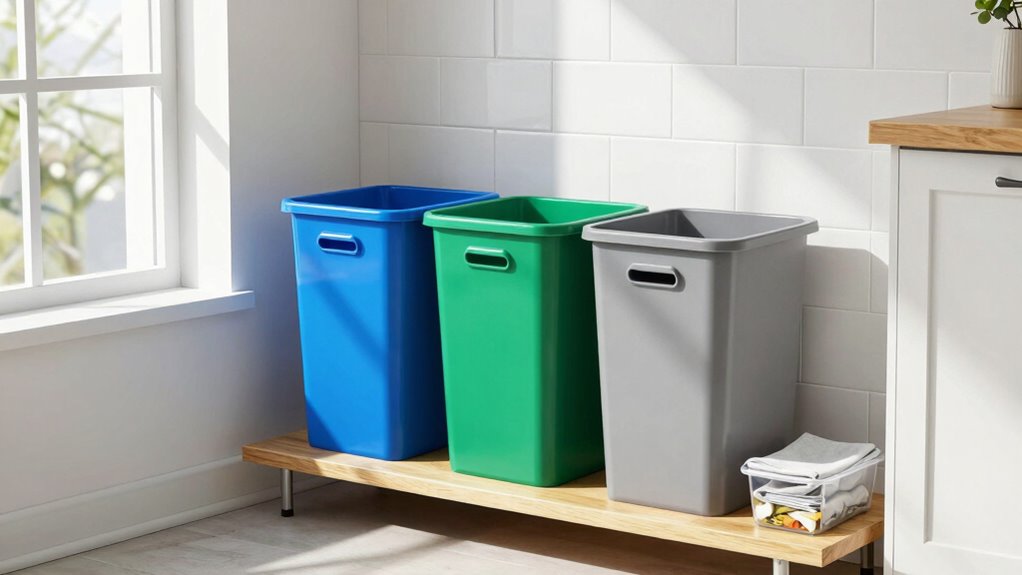
Creating a practical home recycling zone can markedly reduce waste and make sustainability easier. When you set up a dedicated space, you streamline your recycling process, making it more intuitive and less messy. Start by choosing a convenient spot, ideally near your kitchen or laundry area, where you generate most of your recyclable waste. This proximity encourages you to sort waste regularly and keeps recyclable materials from piling up elsewhere. To make your recycling zone functional, invest in clearly labeled bins for different materials—plastics, paper, metals, and glass. Bright, easy-to-read labels help everyone in your household understand what goes where, reducing contamination and increasing the quality of your recyclables.
Create a designated, labeled recycling station near your kitchen for easier, mess-free waste sorting.
In addition to sorting recyclables properly, incorporating composting methods into your recycling zone can profoundly cut down organic waste. Composting turns food scraps and yard waste into nutrient-rich soil, closing the loop in your waste management. You might choose between traditional compost bins, tumblers, or worm composting (vermicomposting), depending on your space and preferences. Whichever method you pick, guarantee it’s accessible and easy to maintain. Educating yourself and others in your household about recycling education and composting techniques is vital. Understanding what can and cannot be composted or recycled helps prevent contamination and maximizes the benefits of your efforts. Share simple guidelines with family members, and consider creating visual aids or cheat sheets to reinforce proper sorting habits. Incorporating knowledge about local recycling guidelines can further ensure your efforts align with community standards and increase your impact. Additionally, staying informed about sustainable waste practices can help you adapt your habits as guidelines evolve. Regularly updating your knowledge about waste management techniques can make your recycling process more efficient and environmentally friendly.
To keep your recycling zone efficient, set a routine for sorting and emptying your bins. Regular maintenance prevents odors and keeps things organized. You might also want to incorporate a small area for recycling supplies—like gloves, trash bags, or cleaning brushes—so everything stays tidy and within reach. Clear signage and consistent practices create a habit that everyone can follow effortlessly. Educating yourself about local recycling rules and participating in community programs can also enhance your efforts, ensuring you’re aligned with municipal guidelines and contributing to broader sustainability initiatives. Additionally, understanding the importance of indoor air quality can help you create a healthier environment in your home, complementing your sustainability practices. Regularly reviewing your recycling setup and adjusting it as needed can also keep the system effective and prevent stagnation or clutter. Keeping the space well-ventilated and free of excess moisture can further support odor control and air quality.
Furthermore, maintaining proper airflow and ventilation in your recycling zone can help reduce odors and improve overall air quality, making it a more pleasant space to work in. Proper ventilation not only keeps the area smelling fresh but also prevents the buildup of potentially harmful fumes from certain materials. Ultimately, a well-organized home recycling zone simplifies waste management, reduces landfill contributions, and promotes eco-friendly habits. By integrating effective composting methods and prioritizing recycling education, you make your home a more sustainable space. The more invested you are in understanding the process, the easier it becomes to maintain consistent, responsible waste disposal practices. Over time, this not only benefits the environment but also instills a sense of pride and mindfulness about your everyday choices. Creating and maintaining a practical recycling zone is an empowering step towards a greener future, one small action at a time.

RecycleBoxBin Triple Recycling Bin – Large Capacity (25 gal. per Bin), All Plastic, Light-Weight, with Changeable Label System
- Large Capacity: 25 gallons per bin
- Lightweight Design: All plastic construction
- Triple Bin System: Three compartments for recycling
As an affiliate, we earn on qualifying purchases.
As an affiliate, we earn on qualifying purchases.
Frequently Asked Questions
How Do I Identify Recyclable Materials in My Household Waste?
You identify recyclable materials by learning common waste sorting techniques and debunking recycling myths. Look for items like paper, cardboard, plastics labeled with recycling codes, metals, and glass. Avoid assumptions; check local recycling guidelines, as some plastics or materials might not be accepted. Remember, understanding what’s recyclable helps reduce contamination, making your home recycling zone more effective. Stay informed and always verify with your local waste management services.
What Are the Best Labels for Recycling Bins?
Imagine you’re a 21st-century Robin Hood, championing the environment. For recycling bins, clear labels like “Recycle Glass,” “Paper,” “Plastic,” and “Metal” work best. Use bold, large fonts and color coding in line with recycling etiquette—blue for paper, green for glass, etc. Place bins in accessible, visible spots near the kitchen or garage, ensuring they’re conveniently located to encourage consistent use and proper sorting.
How Often Should I Clean and Maintain My Recycling Area?
You should clean your recycling area at least once a month to prevent odors and keep it organized. Regular maintenance helps dispel recycling myths, like recyclables attracting pests, which isn’t true if you clean properly. Incorporate composting tips by rinsing containers and composting food scraps separately. Consistent upkeep guarantees your recycling zone stays efficient, hygienic, and eco-friendly, making it easier to keep your home sustainable and waste-free.
Can I Recycle Plastic Bags in My Home Recycling Zone?
Irony strikes again—you can’t recycle plastic bags in your home recycling zone, despite how tempting it is to toss them in with other recyclables. Plastic bag recycling usually requires special collection points or drop-off locations. When household waste sorting, remember to keep plastic bags separate from recyclable plastics to prevent contamination. Instead, reuse bags or drop them off at designated recycling centers to guarantee they’re properly processed.
How Do I Handle Hazardous or Electronic Waste Safely?
You should handle hazardous waste and electronic disposal carefully to stay safe and protect the environment. Never toss hazardous waste like batteries, chemicals, or old electronics in your regular trash. Instead, find local collection sites or special drop-off events for hazardous waste and electronic disposal. Always follow manufacturer instructions for electronics, and consider using designated bins or containers to keep these items separate and secure until proper disposal.

Utopia Kitchen Countertop Compost Bin 1.3 Gallon, Stainless Steel, Silver
- Capacity: 1.3 Gallon stainless steel bin
- Durability: Scratch, crack, and chip resistant
- Odor Control: Includes charcoal filters for smell
As an affiliate, we earn on qualifying purchases.
As an affiliate, we earn on qualifying purchases.
Conclusion
Now that you’ve set up your recycling zone, imagine the difference you’ll make—each bottle, can, and paper saved from the landfill. But don’t stop here; the real challenge lies in keeping it organized and inspiring others around you. Are you ready to take it a step further? Your eco-friendly journey is just beginning, and the impact you’ll have might surprise you. The next move could be the most important—are you prepared to make it?

The Original VermiHut® Plus 5-Tray Worm Compost Bin – Indoor & Outdoor Vermicomposting System, Continuous Flow Food Waste Recycler for Organic Composting & Gardening – Dark Green
- Compact Design: Maximizes capacity in small space
- Odor-Reducing System: Controls odors with improved lid design
- Moisture Management: Maintains optimal moisture for worms
As an affiliate, we earn on qualifying purchases.
As an affiliate, we earn on qualifying purchases.

Terratur 4 Section Recycling Bin for Kitchen – Trash and Recycle Bin Combo for Paper, Plastic, Cans – Indoor Recycling Station – Large Kitchen Trash Can – Office Trash and Recycle Bin Organizer
- Large Capacity: 4 compartments, 42 gallons total
- Stylish and Convenient Design: Suitable for kitchen, office, garage
- Multi-purpose Storage: Top shelf for decor or accessories
As an affiliate, we earn on qualifying purchases.
As an affiliate, we earn on qualifying purchases.